
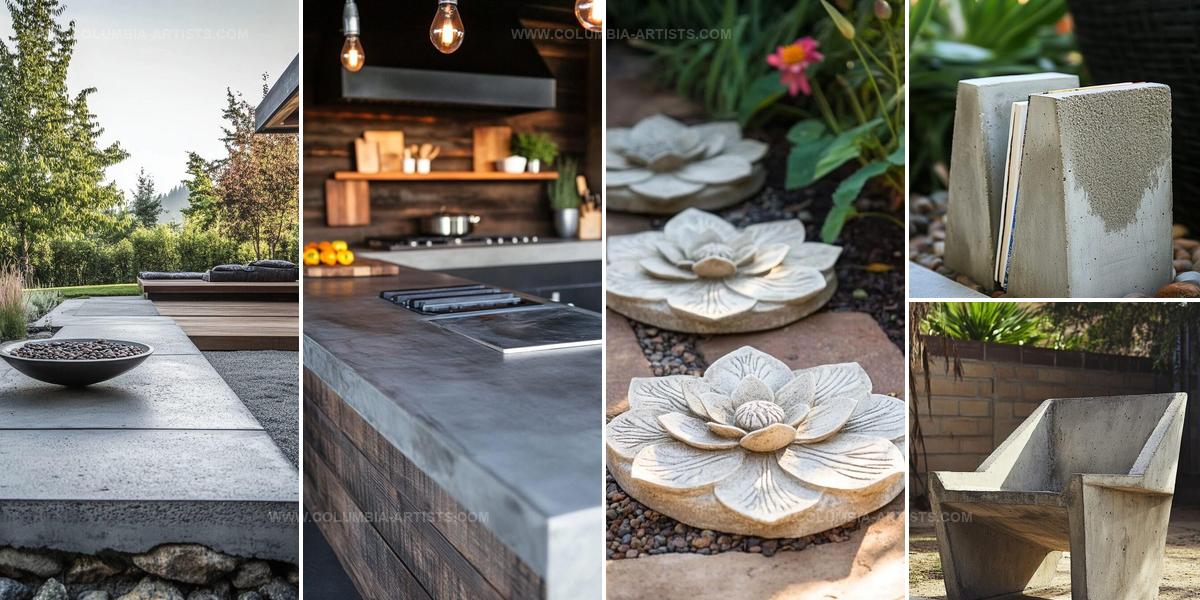
10 Cement DIY Projects That Save Money
Working with cement opens up a world of creative possibilities that can enhance any indoor or outdoor space.
This versatile material costs less than most people expect and delivers professional-looking results when handled properly.
Both beginners and experienced crafters find success because the techniques are straightforward and forgiving.
Modern cement formulas dry faster and offer better durability than older versions, making projects more accessible than ever before.
Small decorative pieces or large functional installations become achievable with basic tools and supplies.
The satisfaction of building something substantial with minimal investment appeals to anyone who enjoys hands-on activities.
So why not roll up those sleeves and see what amazing creations you can bring to life?
Concrete Fire Pit With Integrated Seating
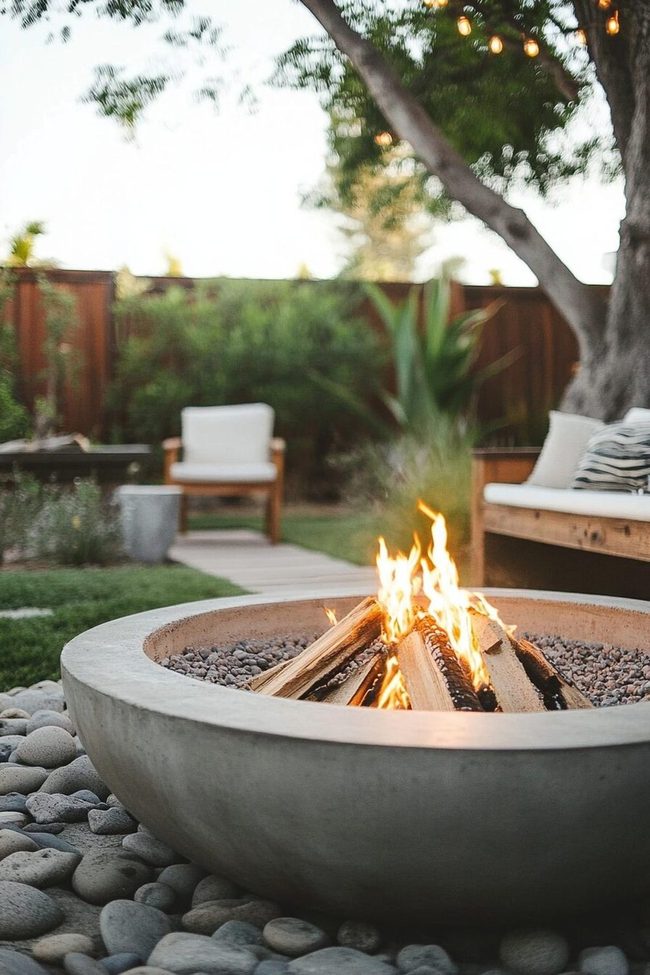
A concrete fire pit built with your own hands becomes the standout feature of any yard, and you can pull it off for a fraction of what professional landscapers charge.
Colored glass aggregate mixed into the concrete surface catches the firelight and sparkles beautifully as flames dance around it, making this the first thing people be aware of when they step outside.
LED lights embedded beneath the rim glow softly when you're not burning a fire, and you can even stamp custom designs into the concrete surface for added visual interest.
Building one yourself means customizing everything from the height and width to integrated seating areas, wood storage spaces, or cooking attachments that suit your specific exterior layout.
Once your concrete fire pit is done, its thermal mass absorbs heat while the fire burns and then radiates that warmth slowly through the evening, keeping you and your dinner guests comfortable as temperatures drop.
Beyond the basics, you can add removable covers that transform the pit into a table when flames aren't needed, or integrate a water feature for dramatic fire-and-water displays that shift the whole mood of your backyard.
Hidden propane connections let you skip the wood prep and enjoy instant flames, while adjustable air flow controls give you the perfect burn every time and protective covers that blend right into the design.
Custom Gray Concrete Floor Tiles
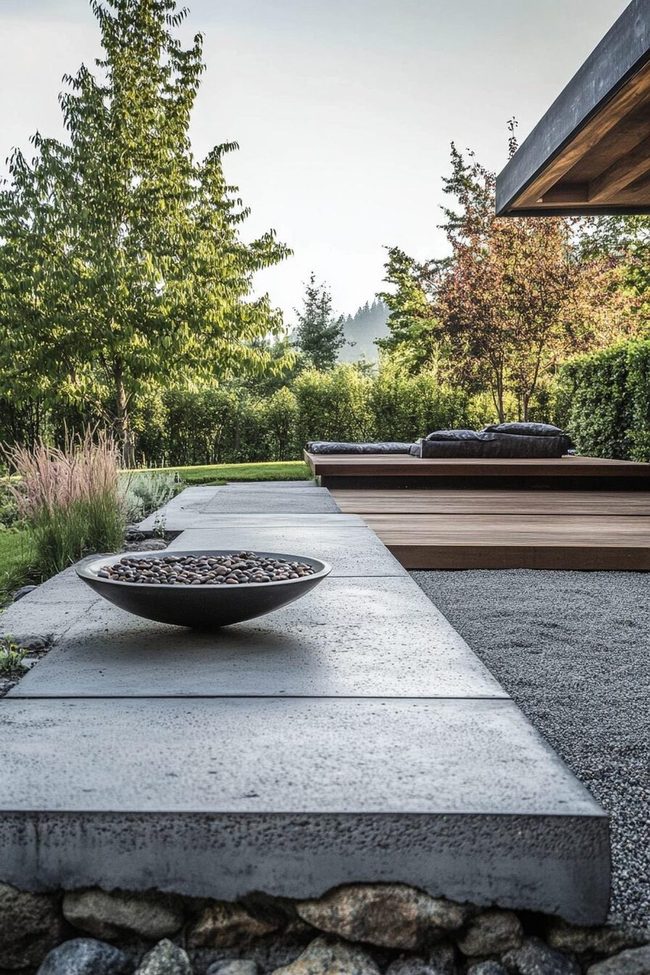
Concrete tiles with intricate patterns and rich color variations can transform your floors and walls into surfaces that rival those found in Mediterranean villas and historic Moroccan riads, with a beautiful patina that only improves as time passes.
Making your own tiles lets you design completely custom patterns, colors, and sizes that you simply cannot find in stores, giving your space one-of-a-kind surfaces that reflect your personal style.
You can embed special effects like marbled color transitions, small objects such as shells or glass, or three-dimensional relief patterns that shift with light and shadow throughout the day.
Advanced options include creating encaustic-style tiles with multiple colored layers, developing textured surfaces for slip-resistance in bathrooms and wet areas, or even embedding heating elements for warm floors in entryways.
Making these tiles is straightforward, you establish or purchase rubber molds, mix fine-grained concrete with colorants, and cure every tile intentionally to prevent cracking and ensure it lasts.
Over time, concrete develops a natural aging process with slight variations in wear patterns and mineralization that add character rather than appearing damaged, something mass-produced ceramic tiles simply cannot achieve.
Producing custom tiles costs just $3 to $5 per square foot compared to $20 to $30 from specialty manufacturers, so you can transform entire rooms for the price of a small store-bought installation.
Concrete Bookends With Embedded Elegance
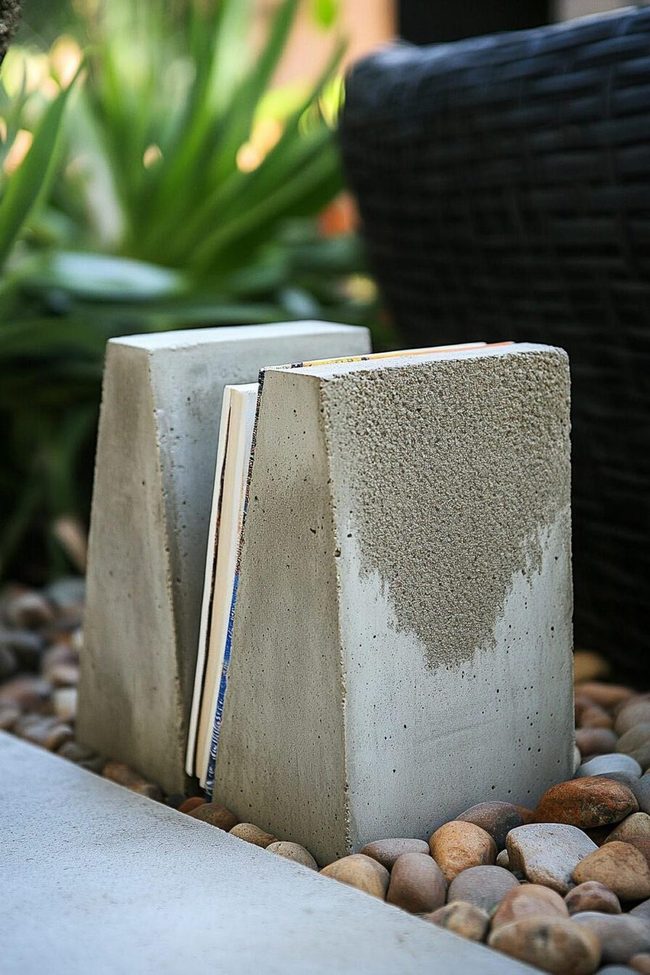
Concrete bookends with visually engaging visual contrasts between rough industrial surfaces and precious materials like gold leaf or polished stone can elevate your entire bookshelf display and catch attention from across the room.
You can embed geodes, metal accents, or colored resin inlays into these pieces, or try advanced techniques like marbled effects with different colored concrete pours and reversible designs with different looks on eachside for seasonal variety.
Literary-themed designs that reference your favorite books or abstract sculptural forms work well depending on your decor style, and you have the freedom to choose minimalist geometric shapes or detailed sculptural pieces that complement your collection.
Making these bookends yourself costs less than $15 in materials while comparable designer pairs retail for $75-200 in specialty shops, so you get quality and savings at the same time.
Concrete's natural weight makes these pieces incredibly effective at supporting books while they also stand alone as art objects that reflect your personal style.
For advanced designs, you can incorporate embedded LED lights, hidden compartments for small valuables, or wireless charging capabilities that go beyond basic bookends.
Adding felt pads to the bottom prevents scratching your furniture and gives your handmade creations a professional finished look.
Simple silicone molds or custom forms made from cardboard and plastic get you started, and basic tools with straightforward techniques mean anyone can succeed at this project.
Concrete Planters With Marble Finishes
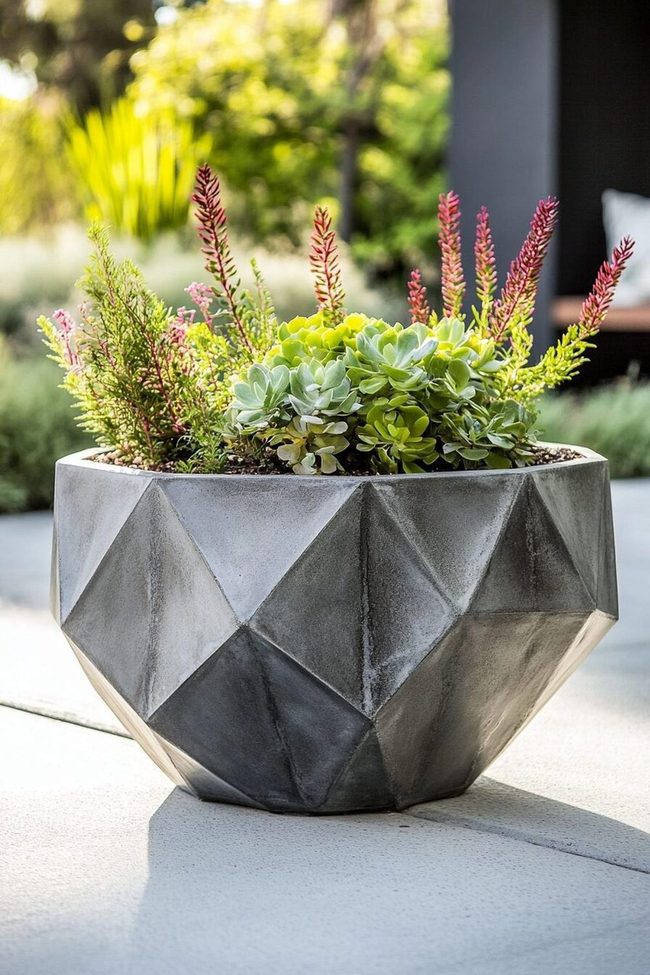
Cement planters with geometric designs and flawless proportions can sit in your home for under $20 each, even though similar versions sell for $100+ in boutique shops.
You can find yourself adding striking visual elements like marble effects with acrylic paint, embedded mosaic pieces, or glow-in-the-dark aggregates that glow beautifully in the evening.
Making these planters starts with nested molds, plastic containers, milk cartons, or custom forms, where the outer mold shapes your planter and the inner one creates the hollow cavity for soil.
Drainage channels can be formed right into the mold during the process, so your plants stay healthy and the planter keeps its polished look.
Advanced makers can lighten their planters by mixing perlite into the concrete or build self-watering versions with hidden reservoirs inside.
Concrete naturally shows beautiful variations in color and texture, meaning throughout planter ends up unique and looks like you collected pieces over years rather than making them all at once.
Fiber reinforcement added to your cement mix lets garden planters survive freezing temperatures without cracking, something many store-bought options can't do.
You can need just simple tools and supplies from any hardware store, and you can build an entire matched set of planters that would cost hundreds if you bought them retail.
Gray Industrial Eatery Surface
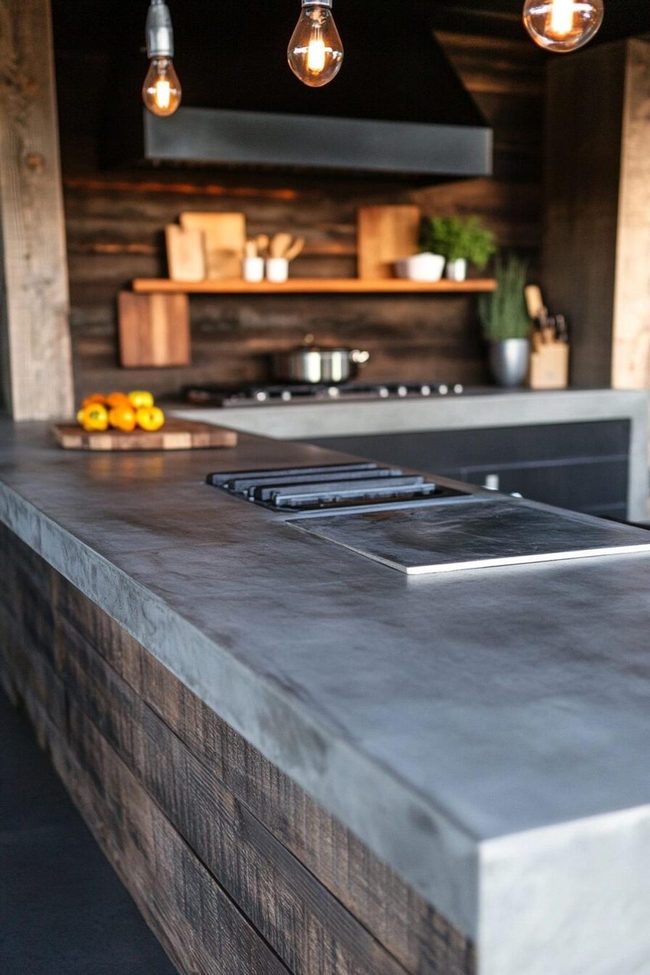
Smooth, cool concrete surfaces that rival luxury penthouse finishes are totally within reach when you decide to build them yourself for a fraction of the cost of stone.
You can embed decorative glass pieces, mix in pigments for custom colors, and polish the surface to anything from matte to high gloss, giving you endless ways to make these countertops uniquely yours.
Built-in features like drainboards, trivets, and even wireless charging stations can be integrated right into the concrete itself, something no factory-made counter offers.
Making your own countertops starts with building a melamine mold to your exact dimensions, then reinforcing it with wire mesh before mixing and pouring the concrete.
Once poured, you can vibrate the concrete to release air bubbles, let it cure properly, and finish it all with a food-safe sealer that locks in durability.
Most people don't realize that beginners can achieve results that look professionally done by simply taking their time and following careful instructions, with the trickiest part being solid reinforcement and crack prevention.
Your company will assume you spent thousands on custom stonework when they find out you created these yourself for just a few hundred dollars in materials.
With proper sealing and care, these countertops last for decades and develop a beautiful patina over time, adding character and becoming something truly one-of-a-kind.
Concrete Stepping Stones Custom Patio Pathways
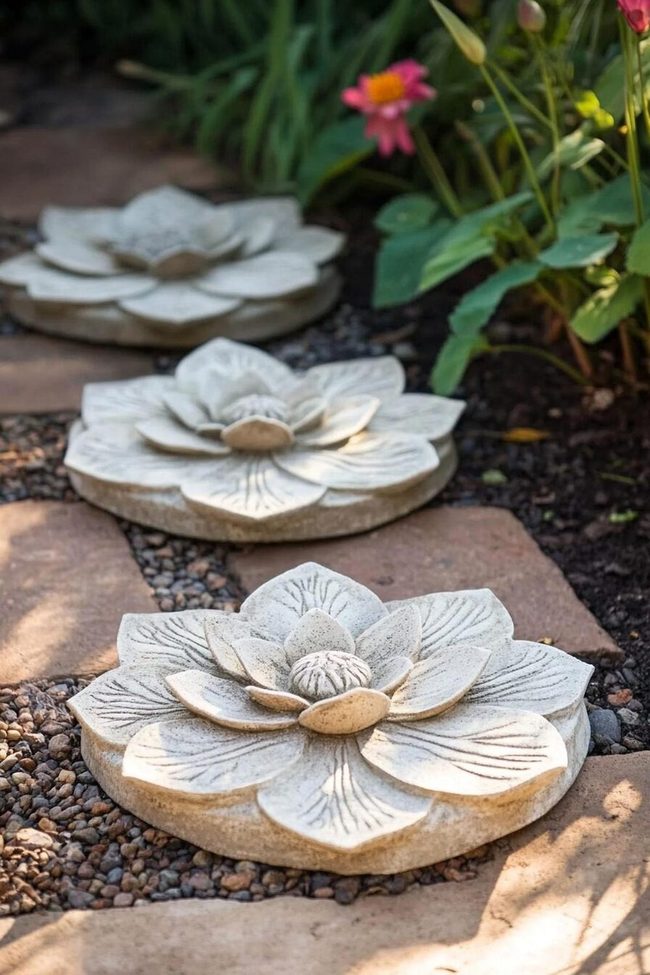
Concrete stepping stones offer you a way to build glowing pathways through your garden using phosphorescent crystals mixed into the wet cement, and these luminous stones transform nighttime strolls into something genuinely special.
You can customize these stones endlessly by stamping patterns, embedding objects, or pressing colored glass into the surface before the cement sets.
Hand prints, children's artwork, or meaningful words stamped into the wet material let you add personal touches that store your memories right into the pathway itself.
Over time, moss grows in the crevices and colors mellow naturally, giving your garden that established charm that feels like it's been there for years.
Making these stepping stones takes just simple cake pans, plastic molds, or even large leaves as forms, and you can bring about dozens in a single weekend.
Beyond aesthetics, embedding heating wires into larger stones keeps pathways clear during winter, while the concrete naturally absorbs and releases heat throughout the day for comfortable walking in any season.
You can match any garden style with with the layout,, Japanese-inspired circles, Mediterranean mosaics, or ultramodern geometric designs all work beautifully.
Building a complete garden transformation costs far less than purchasing designer stones and puts the artistic control entirely in your hands.
Concrete Pendant Lights Filter Warm Glow
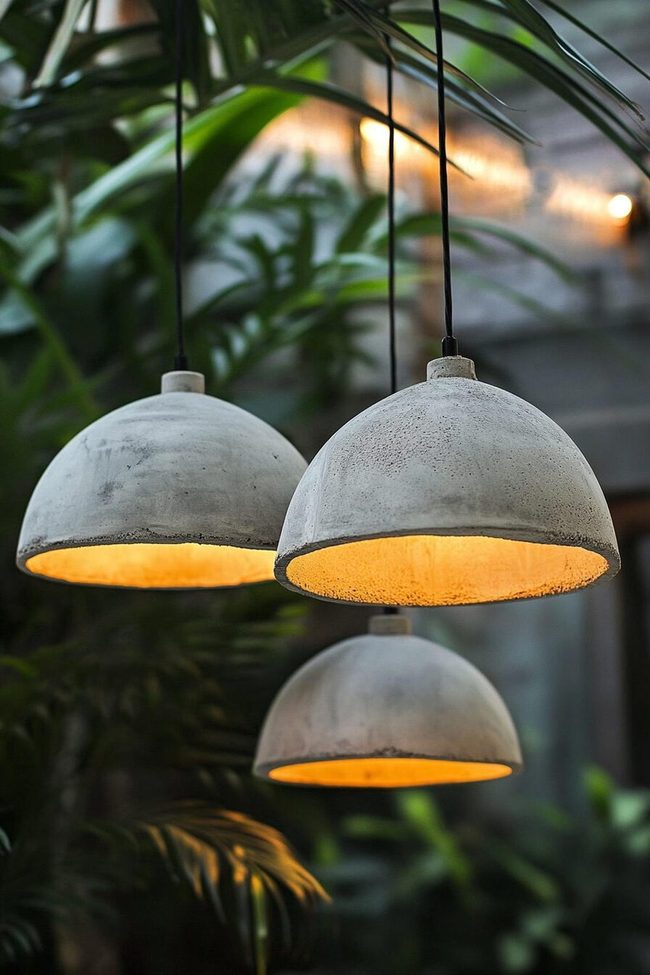
Concrete pendant lights hanging above your dining table stop people in their tracks because they look like they came straight from a high-end design studio, yet you can make one for under $50.
These sculptural fixtures balance industrial rawness with refined form and have become standard in upscale restaurants and boutique hotels.
Making them starts simple: you pour ultra-thin concrete into a mold (plastic containers work fine), embed your light fixture and wiring, and watch the concrete filter light through in unexpected ways.
Light passes through the concrete and creates a warm, diffused glow across the room without harsh shadows or light-filled spots that wash out your space.
You can mix in colored glass or metal flakes that sparkle and shift their appearance depending on where you stand and look at them.
Some people go further and add translucent concrete mixtures or fiber optics that spread points of light across the whole surface like tiny stars.
Concrete naturally cools down, so heat from your bulb dissipates well and these fixtures stay safer for daily use compared to plastic or resin options.
When you reinforce the concrete with mesh or fibers inside, the pendant stays lightweight even though it looks substantial and solid, so you won't need special ceiling support.
Throughout handmade piece ends up slightly different from the others because concrete has natural variations, which means your light is genuinely one of a kind and impossible to exactly copy.
Gray Concrete Wall Sculpture Installation
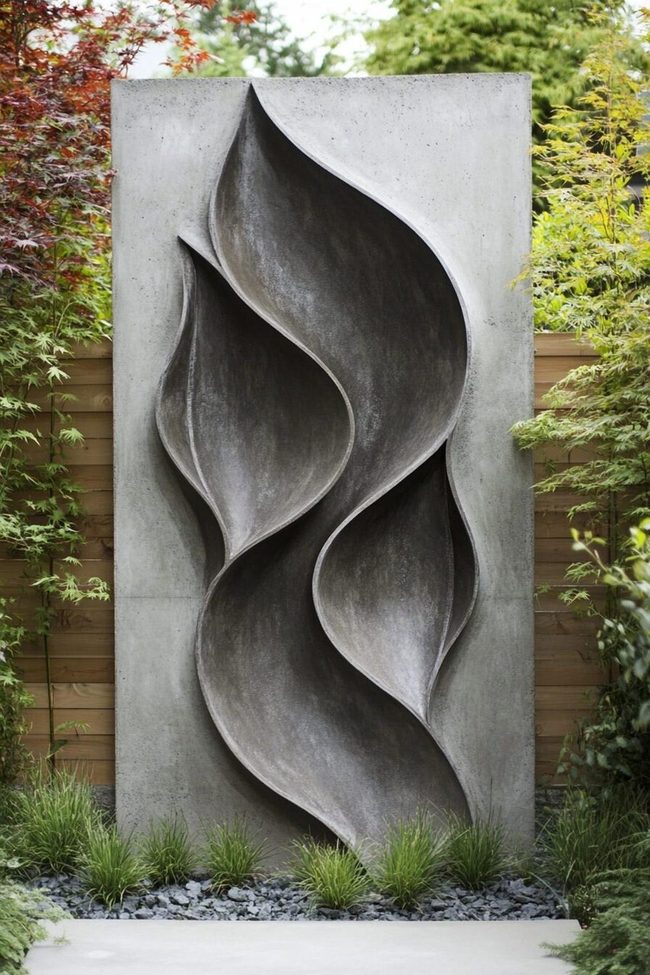
Sculptural wall installations made from concrete offer a striking statement piece that looks like it came straight from an upscale gallery, and the material's ability to capture intricate textures and cast detailed forms in ways flat paintings simply cannot match makes it stand out on any wall.
Concrete reshapes from liquid to solid, and when properly mixed it becomes surprisingly lightweight, allowing you to work with thin, detailed castings that won't strain standard walls or mounting systems.
You can push the artistic possibilities even further by adding contrasting wood inlays, metal accents, colored epoxy "rivers," or LED backlighting that completely changes how the piece looks when darkness falls.
Multi-panel installations can align to form larger images, photographic transfers can be embedded directly into the concrete surface, and mixed media applications open up endless creative directions for your work.
Every concrete pour creates genuine variations with unique color shifts, tiny air pockets, and mineralization patterns that develop character over time much like fine marble does.
With basic tools and specialized concrete mixes designed specifically for art, you can produce gallery-quality installations in just a few months using less than $100 in materials instead of spending thousands.
Gray Concrete Furniture With Integrated Features
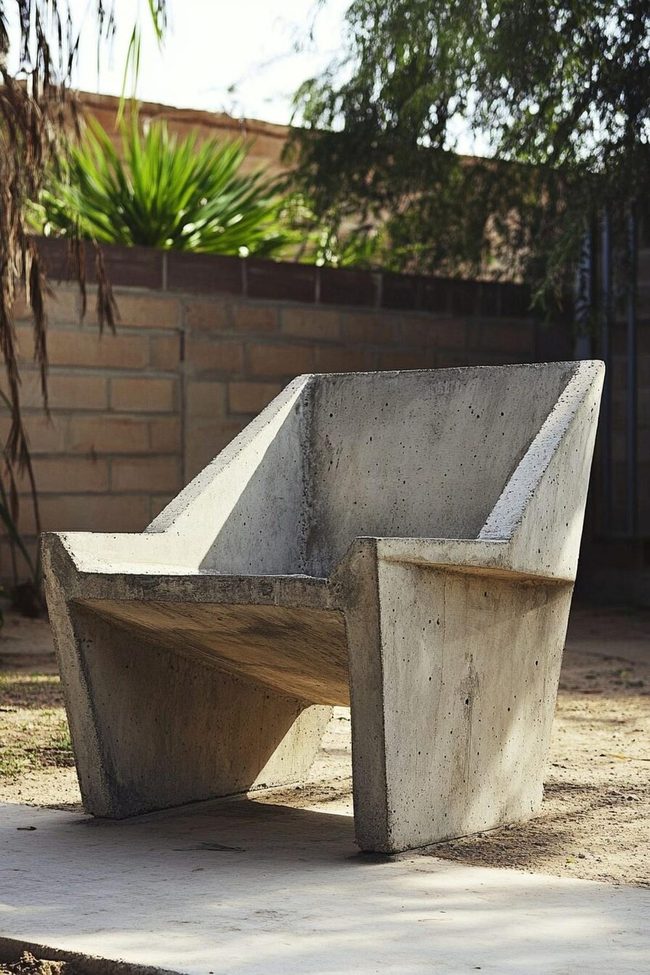
Concrete furniture sits in your living room like those architectural pieces you see in design magazines, except you made it yourself for a fraction of the cost.
Building concrete furniture means you get custom dimensions, integrated features, and one-of-a-kind shapes that fit your exact space perfectly.
Start with sturdy molds made from melamine or sealed wood, reinforce them with rebar or mesh, and pour lightweight concrete mixes designed for furniture.
One major advantage is how concrete works with any design style, set up streamlined minimalist cubes for modern spaces or organic flowing forms that soften contemporary rooms.
You can build in user-friendly elements like USB charging ports, hidden storage, integrated planters, or LED lighting systems that turn a simple table into something functional and beautiful.
Advanced options include floating designs with hidden supports, mixing concrete with wood or metal for contrast, or embedding heating elements in outdoor pieces for year-round use.
Concrete's thermal properties protect your furniture, side tables handle hot cups without damage, outdoor benches warm gradually in the sun without getting too hot, and pieces stay stable through temperature changes.
Sealed properly with specialized finishes, concrete resists stains and water while showing off the material's natural beauty in matte, satin, or glossy options.
You can build designer-quality pieces for under $100 in materials that would cost $500-1500 in stores, customized to match your color scheme and needs.
Custom Concrete Basin With Embedded Aggregates
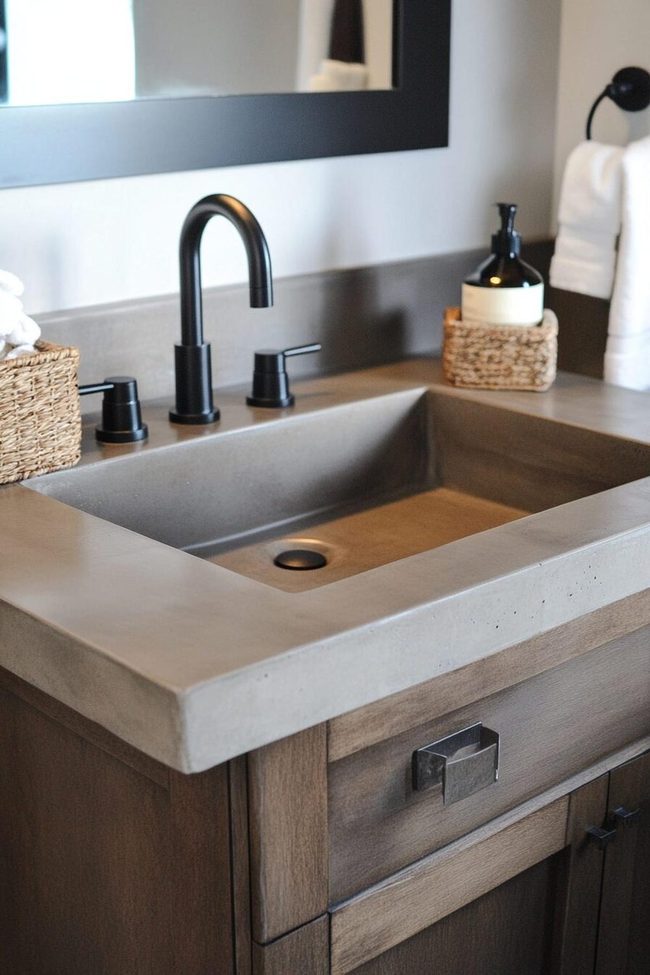
Look at a sink that opens your day with the refined appeal of a luxury hotel, where perfectly balanced proportions and clean lines or flowing curves match exactly what your bathroom needs.
Concrete sinks give you complete control over every aspect, from custom dimensions that fit your space perfectly to built-in features such as soap dishes, backsplashes, or two basins sized just right for how you use them.
Making one involves creating a two-part mold for the outer shape and inner basin, reinforcing it with fiberglass mesh, and mixing specialized concrete that resists water and captures fine accents.
What sets a homemade concrete sink apart is how well you can integrate it into your space, matching your vanity's exact width, choosing a custom color that harmonizes with your tiles, or designing an unusual shape for tricky corner spots.
You might add river rocks embedded throughout, colored glass pieces mixed into the surface, glow-in-the-dark materials for nighttime visibility, or fossilized items that show off one-of-a-kind natural patterns.
More advanced options include sloped drainboards that guide water smoothly to the basin, seamless backsplashes without dirty seams, or even built-in channels that use UV light to sterilize toothbrushes.
Sophia Williams
Content Specialist & Design Enthusiast
Expertise
Content Creation for Interior Design, Modern & Contemporary Decor, Sustainable Design Practices, Space Planning, Color Consultation, Home Styling Tips, DIY Home Projects, Trend Analysis, Audience Engagement
Education
Florence Design Academy (Florence, Italy)
KLC School of Design (London, UK)
Sophia Williams, Lead Editor at columbia-artists.com, specializes in making design simple and accessible. She studied at Florence Design Academy and earned a Certificate in Interior Decoration from KLC School of Design in London.
With 5 years of experience, Sophia has worked with design publications and industry experts, helping readers bring their ideas to life. She focuses on practical tips, styling tricks, and DIY projects to make decorating fun for everyone.
In her free time, she enjoys flea markets, upcycling furniture, and exploring sustainable design.