
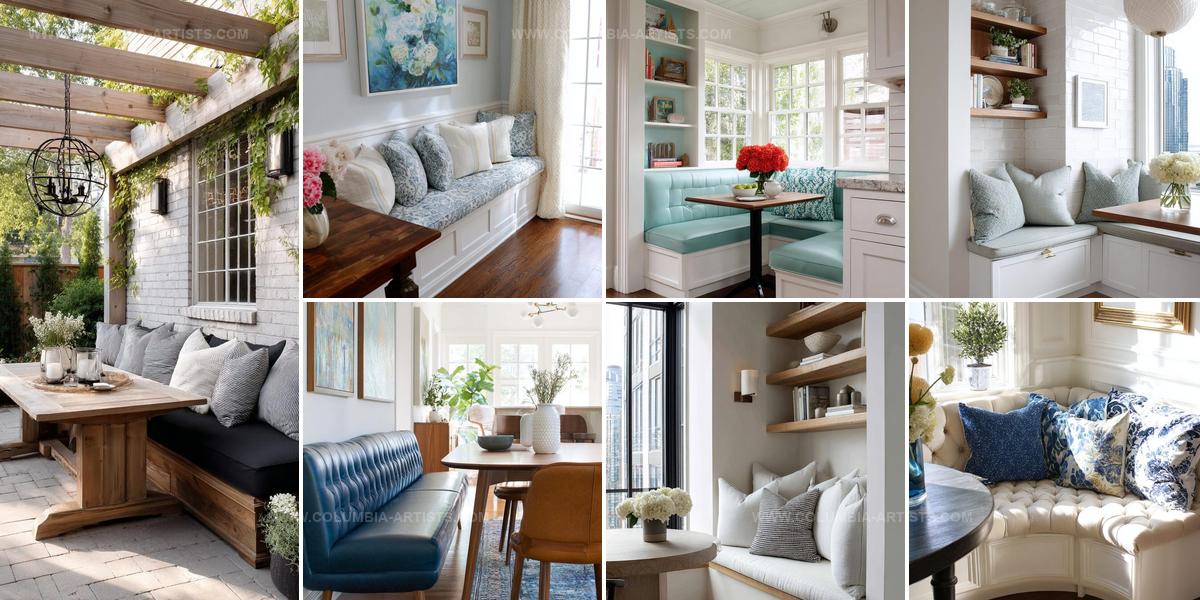
10 Built-In Banquette Seating Designs That Save Space
A banquette seating design can completely change how a dining area functions and feels in any home.
Building one on your own offers the perfect blend of cozy comfort and smart space management.
Custom benches fitted snugly against walls or windows provide extra storage underneath while creating an inviting spot for meals and conversation.
The process requires basic carpentry skills, careful measurements, and an eye for style that matches the rest of the room.
Whether working with a breakfast nook, kitchen corner, or formal dining space, the right approach makes installation surprisingly manageable.
Upholstery choices, cushion thickness, and back support all play important roles in achieving both beauty and function.
Once finished, family and friends will gather around this handcrafted addition for years to come.
Wall-Suspended Seat With Integrated Lighting
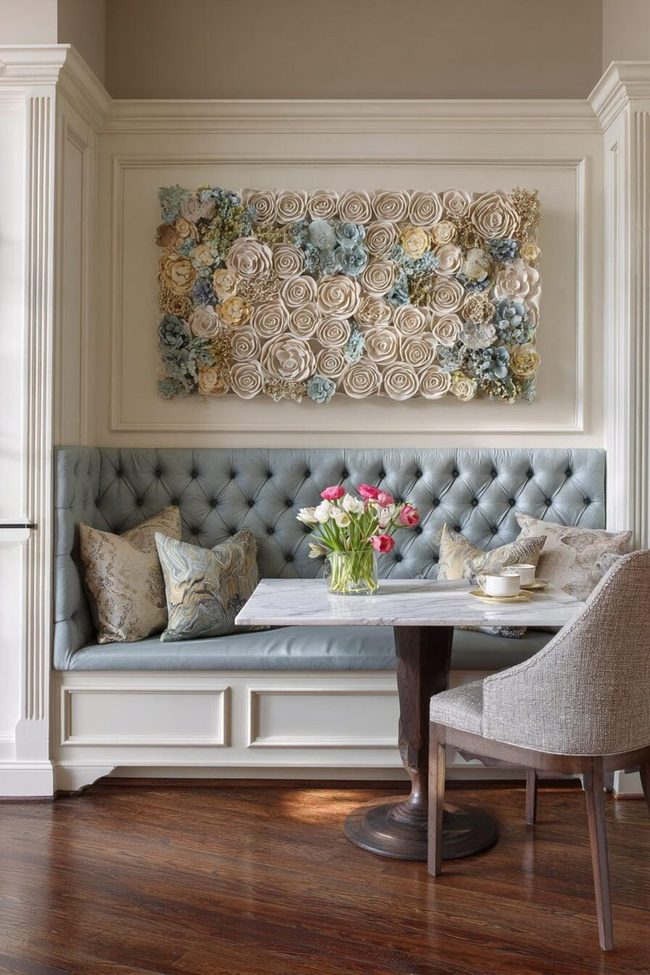
This specific banquette that seems to levitate off your wall becomes an instant showstopper in any room, and the secret lies in hidden support systems combined with strategic lighting underneath.
You can build this smooth seating piece using lightweight materials like aluminum framing or reinforced plywood mounted to wall studs with a French cleat system that safely holds at least 500 pounds.
Recessed LED strip lights positioned beneath the bench form that weightless appearance, and adding a second lighting zone behind the backrest produces a glowing halo that makes the entire structure appear suspended in air.
Minimalist design works best here, so stick with straight lines and conceal all fasteners to keep the aesthetic clean and uncluttered.
This specific choice of upholstery color matters too, blend it with the wall for maximum floating effect or go bold with contrast if you want a more dramatic statement.
Paint the wall behind your banquette slightly darker than the surrounding walls and the bench truly separates from the surface.
Tuck touch-activated switches underneath the seating edge so you can control the integrated lighting without any visible switches interrupting the streamlined look.
Cook Nook Seating With Hidden Space
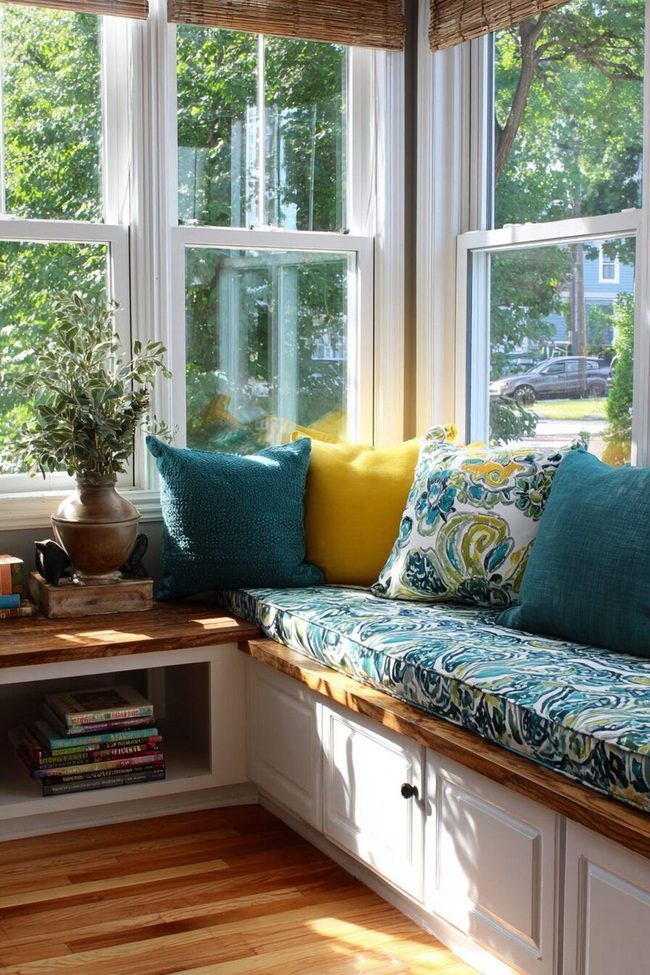
Built from kitchen cabinets arranged in your preferred configuration, a storage-smart banquette solves the problem of kitchen clutter while giving you comfortable seating for daily meals and gatherings.
Standard 24-inch-deep base cabinets work beautifully as the foundation, offering plenty of room to stash everything from holiday platters to small appliances while keeping the bench depth comfortable for sitting.
You can want to secure these cabinets firmly to both the floor and wall for safety, especially if you're building a longer unit where multiple people will sit together.
On top, add a plywood surface that extends about 2 inches beyond the cabinet fronts and creates that slight overhang that makes sitting feel more natural.
Inside, understated-close drawer slides prevent pinched fingers and give your project that polished, professional quality you'd find in a store-bought piece.
Stack your storage with organized drawer dividers for table linens, placemats, and napkin rings so everything has its place.
Slim pull-out pantry shelves tucked into 6-inch gaps between wider cabinets hold spices and narrow items that would disappear in deeper spaces.
Reclaimed Natural Timber Farmhouse Banquette
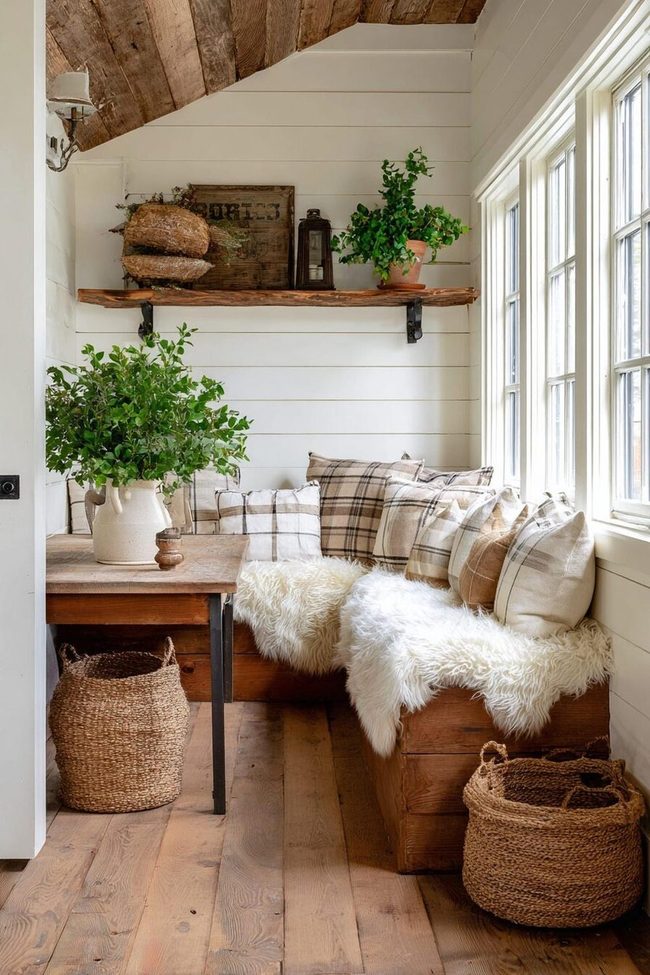
Metal pipe fittings and industrial brackets gleam against weathered barn wood, anchoring a banquette that channels farmhouse charm through reclaimed materials and vintage-inspired small touches that celebrate imperfections rather than hide them.
Sourcing reclaimed wood or pallet boards and preserving their patina gives you authentic character, while a simple box frame built from new 2×4s provides the structural integrity needed underneath.
Sand away splinters for safety on seating surfaces, but leave other distressed spots alone so the weathered look shines through.
Once your frame is solid, seal everything with clear polyurethane to protect the wood without masking its natural beauty and prevent future splintering.
Vintage crates tucked underneath offer storage that feels collected rather than stored, and grain sack fabric or ticking stripe cushions add that unpretentious, gathered-over-time quality we all love in farmhouse spaces.
Railroad lanterns or mason jar lights mounted above complete the aesthetic by bathing the whole setup in period-appropriate glow.
You don't need to match everything perfectly or follow a rigid design plan, this style thrives when things feel discovered rather than coordinated, making it ideal for DIYers who value character and authenticity over polished perfection.
Concrete Block Patio Seating
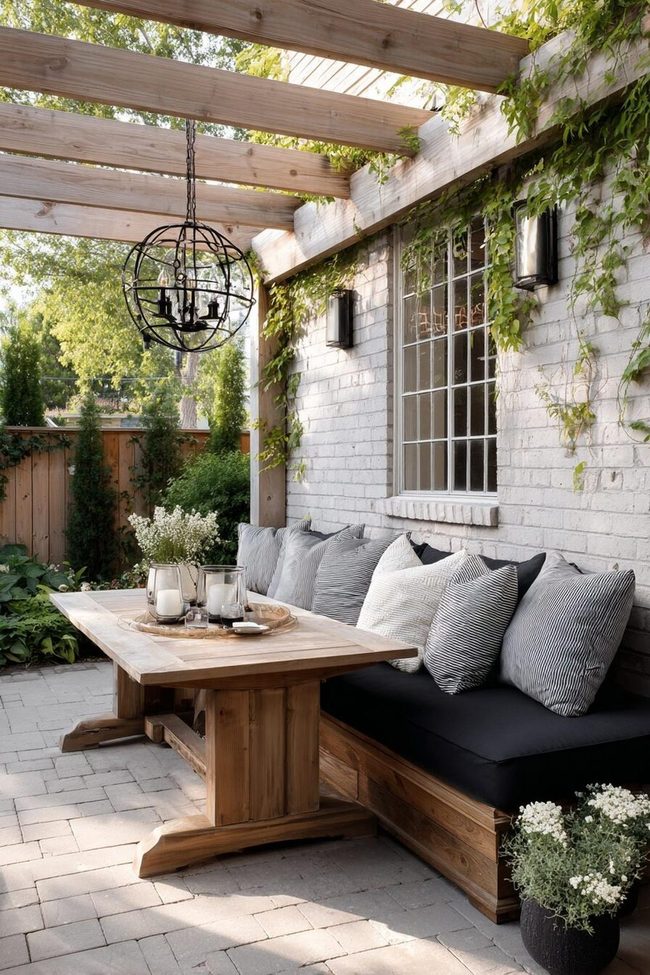
Concrete blocks form the sturdy foundation that will last for years, so start by preparing a level surface with sand if your yard has any dips or uneven spots.
Stack your concrete blocks in your chosen pattern and use construction adhesive between layers to lock everything in place.
A frame made from pressure-treated 2×4s sits across the top of the blocks and supports your seating surface.
Cedar or other weather-resistant decking boards lay across this frame with small 1/8-inch gaps between them so water can drain away properly.
Multiple coats of exterior sealant protect all the wood, especially the end grains where moisture sneaks in most easily.
For cushions, quick-dry foam from marine supply stores keeps things comfortable without staying waterlogged after rain, and Sunbrella fabric or similar outdoor materials resist fading and mildew while standing up to years of use without breaking down.
Secondhand Rustic Timber Banquette Seating
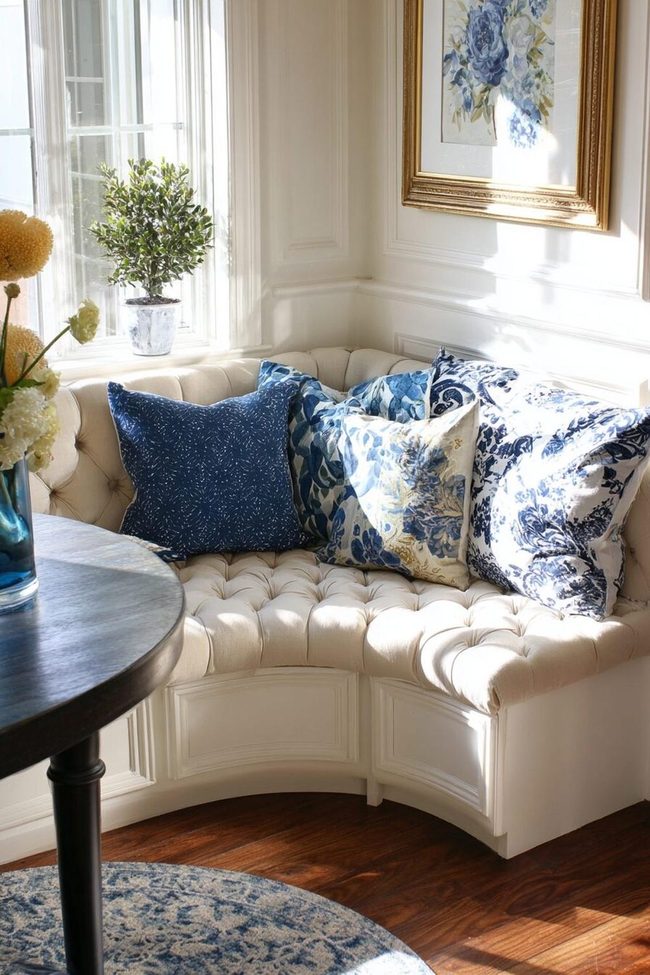
Hunting through Facebook Marketplace or thrift stores can uncover solid wood pieces with good bones that transform into a striking statement banquette telling its own story while serving as functional seating.
Strip away dated finishes and sand everything down to expose a blank canvas for paint colors that match your existing décor, then remove drawers from dressers while keeping the fronts attached to preserve character and open storage cubbies.
Secure multiple furniture pieces together using metal brackets and wood screws to form one stable unit, then top it all with 3/4-inch plywood cut to size and covered with high-density foam that overhangs the front edge by an inch for comfort behind the knees.
Select durable upholstery like cotton duck, denim, or wool blends that stand up to regular use and the wear that comes with daily life.
Installing casters on the bottom means you can slide your banquette around whenever you need to clean underneath or shift things around for hosting people.
Avoid particle board furniture since it won't hold together under the weight and stress of being used as seating day after day.
What starts as someone else's castoff becomes your one-of-a-kind seating area that anchors a room and sparks questions about where you found such a unique piece.
Angled Wooden Banquette With Grain
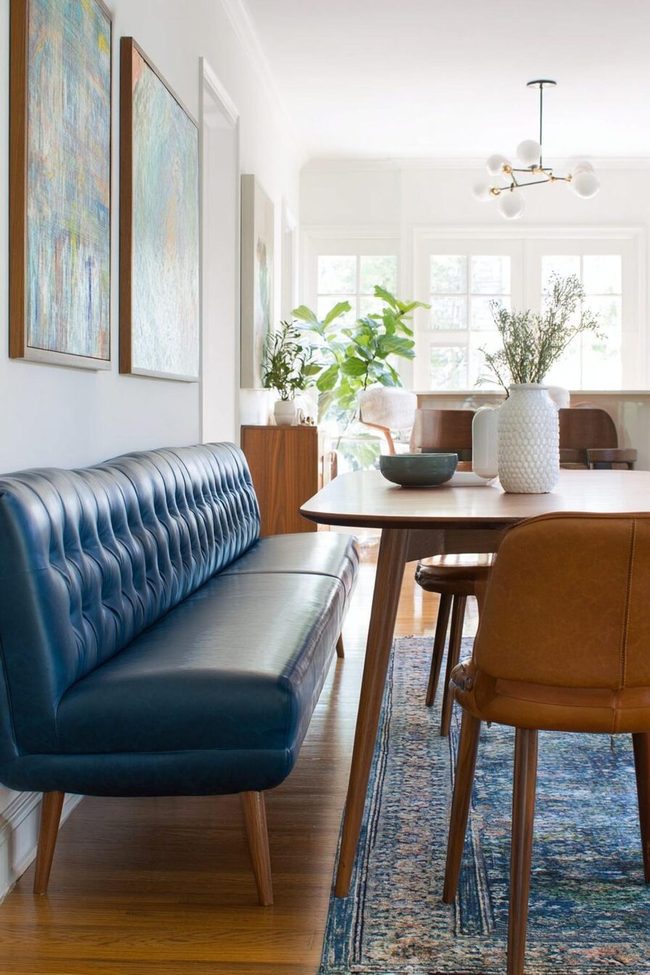
This refined, angled banquette with tapered legs and clean lines brings serious Mad Men energy to your dining area while honoring mid-century design principles.
Walnut, teak, or ash wood with prominent grain patterns works best, and you'll want to focus on that beautiful wood grain as the star of the show.
Your seat height should land around 16-17 inches, slightly lower than standard dining chairs for a lounge-like feel that still looks intentional.
Set those angled legs at the distinctive 15-degree splay that defines mid-century furniture, and add just a 5-degree angle to the backrest for comfort without sacrificing the clean aesthetic.
Thin cushions no thicker than 2 inches in period-appropriate fabrics like wool bouclé or textured solids keep the profile low and lean.
Consider adding a floating shelf along the back of the banquette to hold cocktails or small plates, which means you won't need extra side tables taking up space.
Hairpin legs or carved wooden legs with brass feet give you authentic mid-century small touches that elevate a DIY project, and finishing your wood with Danish oil creates a warm, hand-rubbed look that develops character over time.
Banquette Seating Attached Island
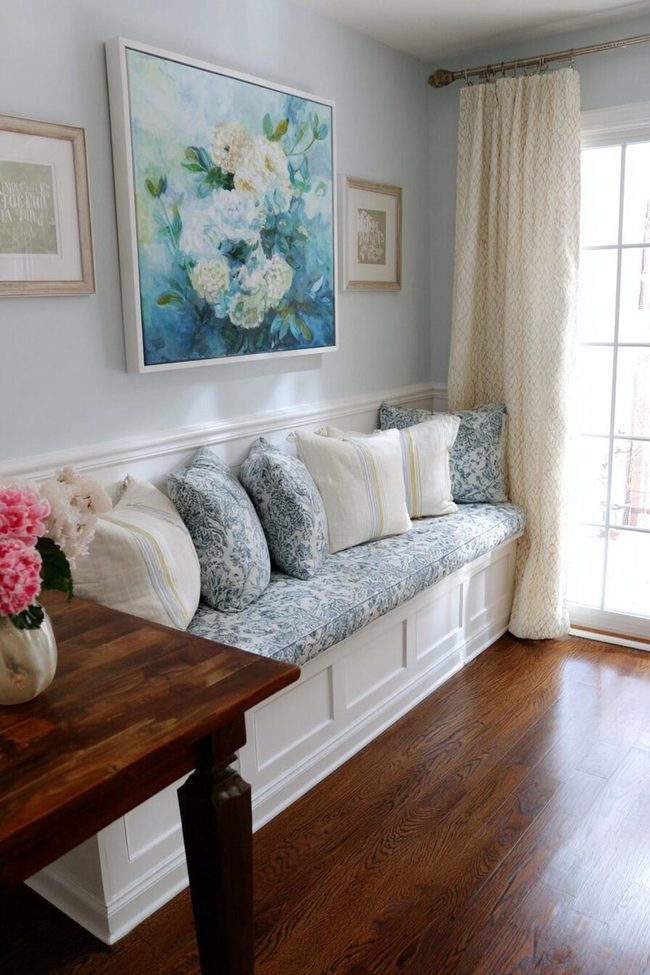
Kitchen islands paired with banquette seating form a dual-purpose design that maximizes your space without eating up floor real estate.
Start by anchoring your island securely to the floor, then extend the countertop overhang to 12-15 inches on the seating side so your knees have room to tuck in comfortably.
Build a half-height wall along the back that connects to your island base and serves as both structural support and a backrest for whoever sits there.
Slip a slim storage shelf inside this half-wall to keep cookbooks and everyday items within arm's reach while you cook or eat.
Counter-height seating at 36 inches works better than standard dining height for the design, giving the space a relaxed, friendly vibe that encourages people to linger.
Add footrests using metal plumbing pipe or wooden dowels at the island base so shorter family members and kids can sit comfortably with their feet supported.
Pick upholstery fabrics that coordinate with your kitchen palette without matching it exactly, and go for stain-resistant, wipeable materials since kitchen spills happen no matter how careful you are.
Remember that DIY projects shine brightest when you adapt them to your own needs, mix ideas from different sources, adjust dimensions to fit your room, and choose colors and textures that feel right to you and your home.
L-Shaped Corner Banquette With Options
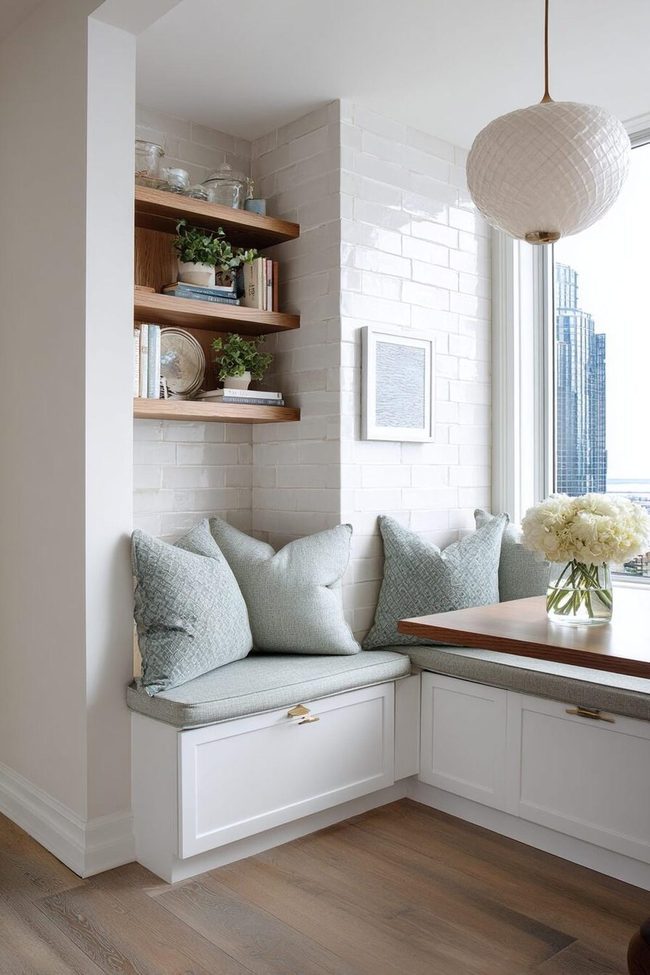
View yourself sliding into a sun-drenched corner nook every morning that rivals the favorite café, and you can find an L-shaped corner banquette design puts dead space to work while offering the perfect spot for coffee or family meals.
Build the seating platform at 18 inches tall using a sturdy frame of 2x4s attached to wall studs, as this height pairs perfectly with a standard table and keeps structural integrity intact.
Memory foam cushions wrapped in washable, spill-resistant fabric make the spot irresistible to everyone in the household, and choosing indoor-outdoor fabrics in vibrant patterns handles the spills and stains that busy kitchens inevitably see.
Hinged tops on the bench seats unlock hidden storage for seasonal linens, kids' art supplies, and other items you want close but out of sight.
Shallow drawers built beneath the seating keep frequently used things from disappearing into deeper storage spaces.
Wall sconces mounted above the banquette deliver warmth and light without eating into valuable table space with traditional lamps.
Floating shelves installed above the seating give you room to display plants, coffee mugs, or cookbooks and inject personality into the nook.
Bay Window Cushioned Seating Bench
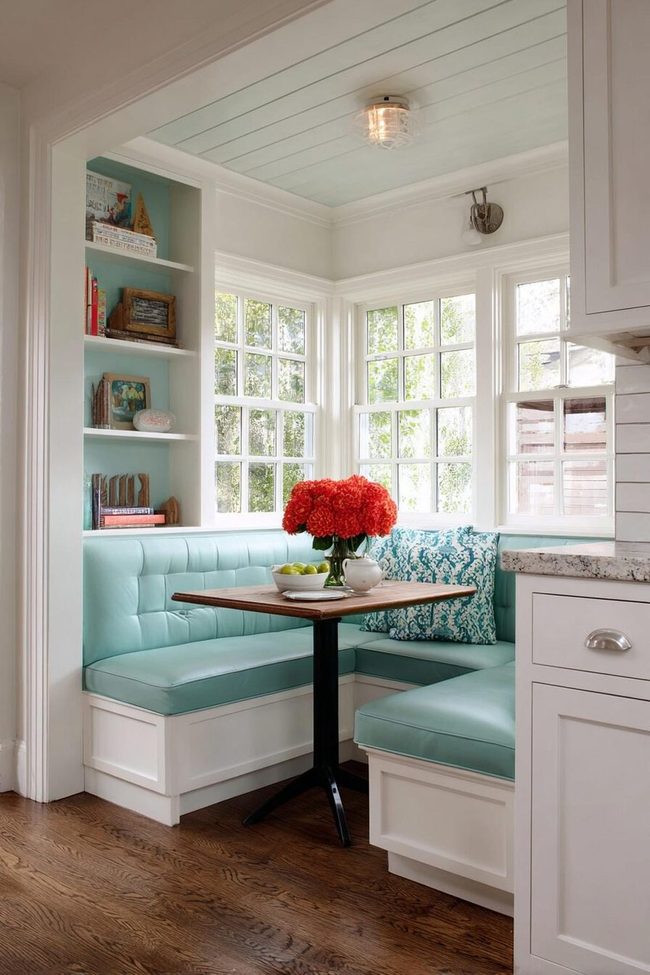
That awkward bay window collecting houseplants is actually prime real estate for a dreamy banquette that anchors your whole room.
Following the natural curve or angles of your bay window shapes an organic seating area that feels like it was always meant to be there, and measuring precisely while accounting for heating vents or electrical outlets keeps everything functional.
Before cutting expensive materials, use cardboard to shape a template because bay windows rarely have perfect angles and this step saves costly mistakes.
Build a frame using pressure-treated lumber if your bay window gets significant sun exposure since this prevents warping over time, and add extra insulation behind your seating to prevent heat loss through the window during colder months.
Install a series of cabinet-grade plywood boxes as the foundation and you get both structure and built-in storage compartments for keeping things organized.
Top with 3-inch foam cushions wrapped in batting before adding your chosen fabric, secured with a professional-grade staple gun and slightly extended beyond the edge of the bench for a softer profile.
Throw pillows in complementary colors soften the angles and add a layered, designer feel without draining your budget, making this corner a place where you actually want to sit and spend time.
Wall-Folding Dining Bench Solution
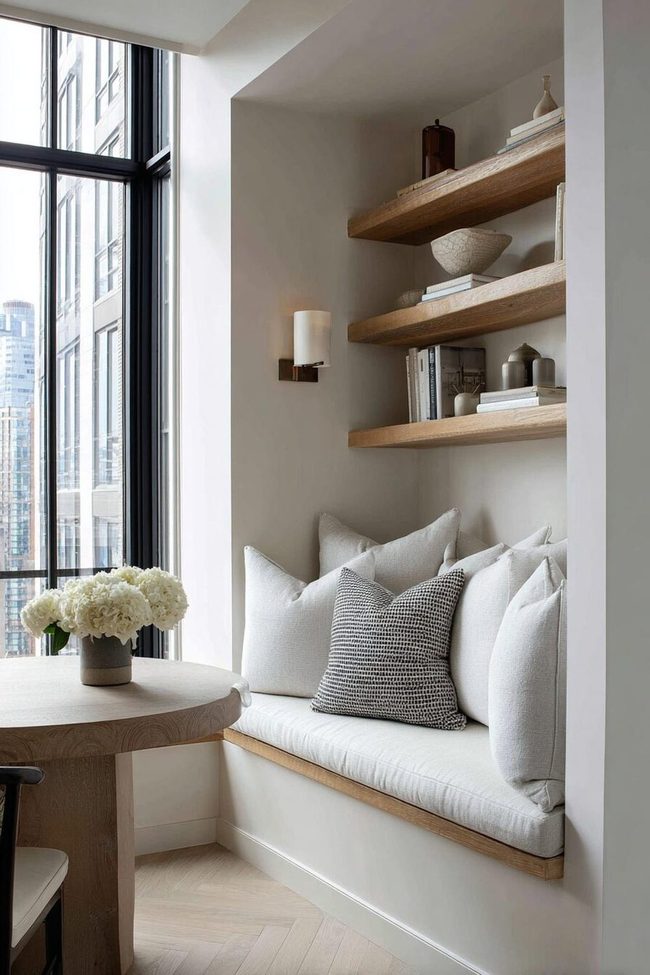
When you fold down a Murphy-style banquette, it elevates your dining area with bold visual drama, this genius design disappears flat against the wall and vanishes in under a minute when you're done eating.
Heavy-duty hinges rated for at least 300 pounds anchor the wall-mounted frame and handle multiple diners without strain, so you need a sturdy foundation from the start.
Hollow-core doors reinforced with an interior frame of 1×3 lumber give you a lightweight while still feeling strong bench structure that balances durability with easy handling.
Gas pistons borrowed from car trunk mechanisms help you lower and raise the banquette with barely any effort, making daily use smooth and effortless.
A large piece of artwork or decorative panel mounted to the underside becomes your room's visible surface when folded up, turning the hidden side into a design statement.
Keep your slim profile to no more than 8 inches of depth when stowed so the banquette doesn't stick out awkwardly into your living space.
Simple locking mechanisms secure the unit closed and prevent accidental openings, while magnetic catches hold cushions in place during use so they won't slide around.
For small-space living, this fold-up design solves the constant tension between needing a dining table and wanting to reclaim floor space whenever you need it.
Sophia Williams
Content Specialist & Design Enthusiast
Expertise
Content Creation for Interior Design, Modern & Contemporary Decor, Sustainable Design Practices, Space Planning, Color Consultation, Home Styling Tips, DIY Home Projects, Trend Analysis, Audience Engagement
Education
Florence Design Academy (Florence, Italy)
KLC School of Design (London, UK)
Sophia Williams, Lead Editor at columbia-artists.com, specializes in making design simple and accessible. She studied at Florence Design Academy and earned a Certificate in Interior Decoration from KLC School of Design in London.
With 5 years of experience, Sophia has worked with design publications and industry experts, helping readers bring their ideas to life. She focuses on practical tips, styling tricks, and DIY projects to make decorating fun for everyone.
In her free time, she enjoys flea markets, upcycling furniture, and exploring sustainable design.