
8 Simple Embroidery Ideas for Beginners to Start Creating
Embroidery opens a world of creative expression perfect for anyone picking up a needle for the first time.
This craft combines relaxation with artistic satisfaction as colorful threads come together to form beautiful patterns.
Simple stitches can produce stunning results without requiring years of practice or expensive materials.
Projects range from small designs that take minutes to complete all the way to larger pieces that develop skills gradually.
The basic techniques are easy to learn and provide a foundation that lasts a lifetime.
Once you master a few fundamental stitches, countless patterns become accessible and enjoyable to make.
Creativity flows naturally when working with fabric and thread, so why not begin today?
Endless Pink Spirals Grid
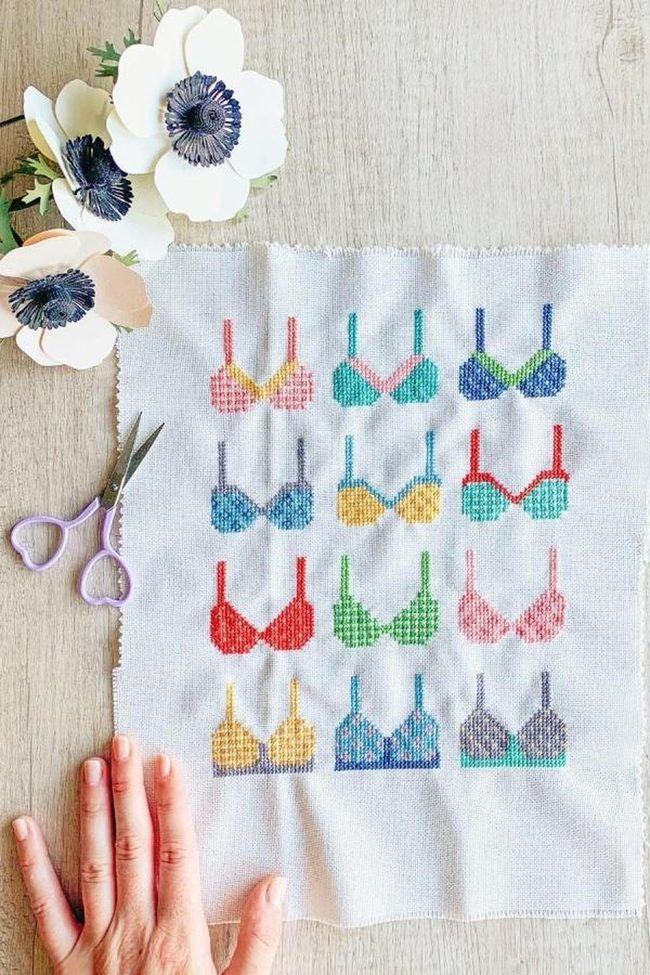
Repeating simple motifs across fabric creates eye-catching effects without needing advanced skills, and rows of flowers, geometric shapes, or basic borders that show up at regular intervals give you impressive results fast.
One repeat doesn't have to be perfect because it blends right into the overall pattern, making these projects forgiving and great for building your confidence with basic stitching.
Once you figure out one shape, the rest is just doing it over and over, and you get better with across row so your early mistakes fade into the design anyway.
Stitching the same leaves or spirals repeatedly becomes surprisingly soothing when your brain needs something calm to focus on, and you can work without counting or measuring and just follow the rhythm.
Even if the leaves don't match perfectly or one turns out wrong, it still looks good and you can always pretend a mistake is just a new variation.
Setup works well for learning muscle memory and spacing without pressure, plus you can stop halfway through and honestly call it minimalist if you want to.
Festive Stitching One Small Day
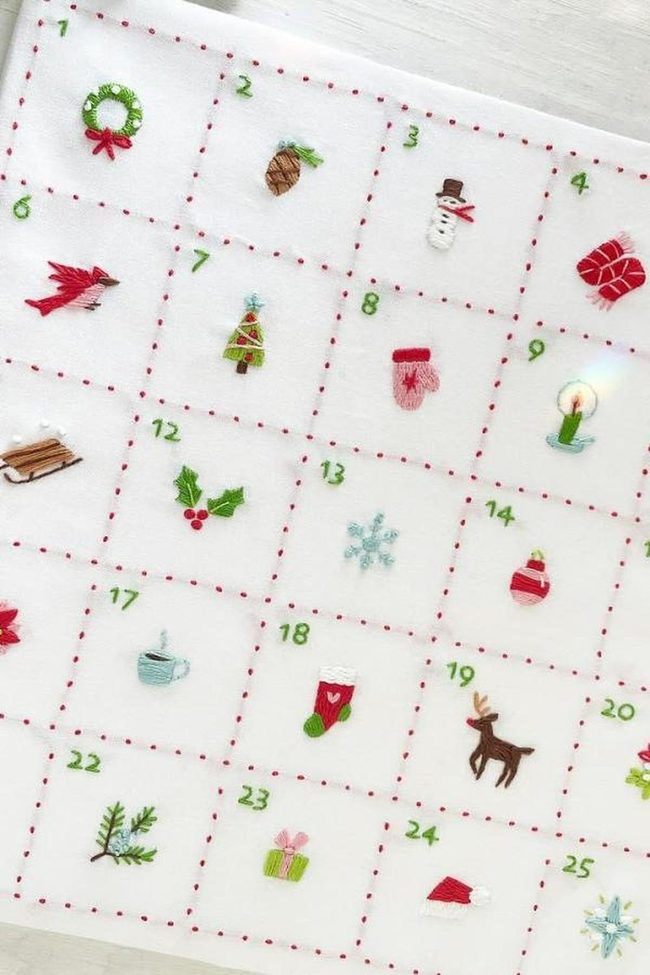
Seasonal embroidery projects turn your stitching into celebrations tied to holidays and the calendar year, and they transform simple needle work into decorations or gifts that feel genuinely special for beginners learning space-saving skills.
Picture a Christmas advent calendar entirely stitched in tiny squares, eachday holds a small icon that offers quick wins and helps you practice detail work without needing hours and multiple snacks to finish.
Summer stitching can look like fireworks exploding across fabric, where you practice lines and loops with French knots that may not behave perfectly, and even if your fireworks resemble tangled spaghetti, the basic city silhouette underneath is just rectangles that beginners handle with ease.
Autumn designs scatter warm objects, scarves, squirrels, pies, hedgehogs, across warm colors with simple lines and tiny fills, letting you learn the basics without tedious repetition and achieving something far more charming than typical seasonal clichés.
Holiday projects provide steady motivation because they connect your craft time to moments you already care about, and they give your new skills real purpose beyond practice.
Adhesive Patterns Skip Hand Transfer
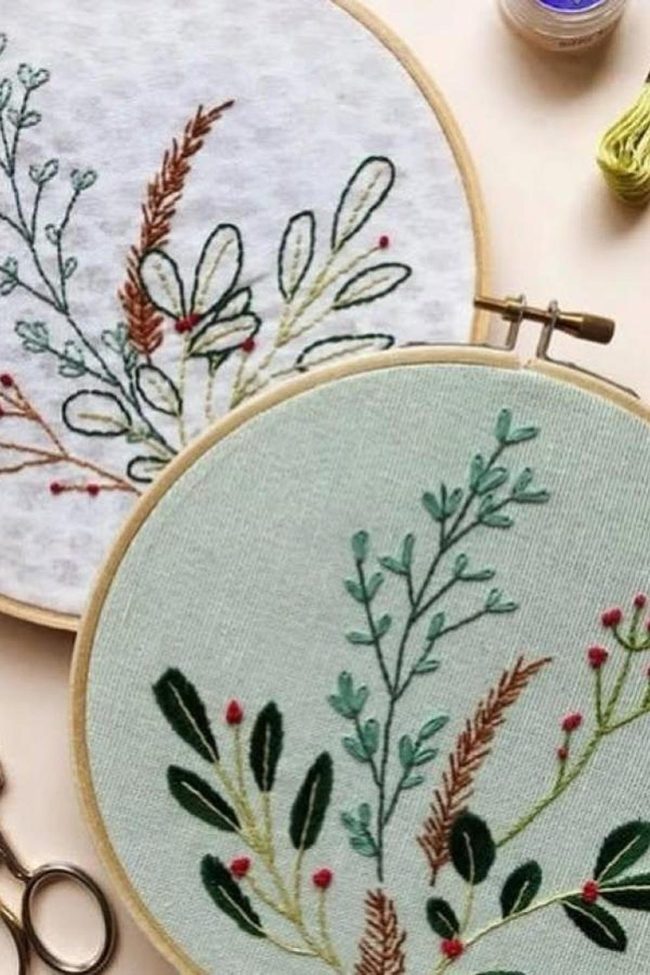
Stick-and-stitch designs offer adhesive-backed patterns that stick directly onto fabric without any hand tracing or transfer work needed.
You simply peel the backing, press it onto your cloth, stitch along the printed lines, then rinse or peel away the paper once you're done.
Spatial idea works beautifully for people new to embroidery who want clean, polished results without needing to draw or transfer designs manually.
What makes this method so satisfying is how the paper guides your needle while you learn, and beginners can skip the stress of positioning patterns correctly since the adhesive holds everything in place.
Even if your stitches wander a bit off the marked lines, organic designs like leaves and flowers still look natural because real plants don't grow in perfectly straight rows anyway.
There's something oddly fun about slapping a mushroom or flower onto your jeans and pushing a needle through it, especially when the backing dissolves away after washing like it was never there.
You get the structure and support while learning embroidery basics, and any wobbly knots on the back stay hidden once you're finished.
These patterns essentially serve as training wheels for stitching, except they help you make things that actually look good rather than clunky or awkward.
Rainbow Thread Learning Lines
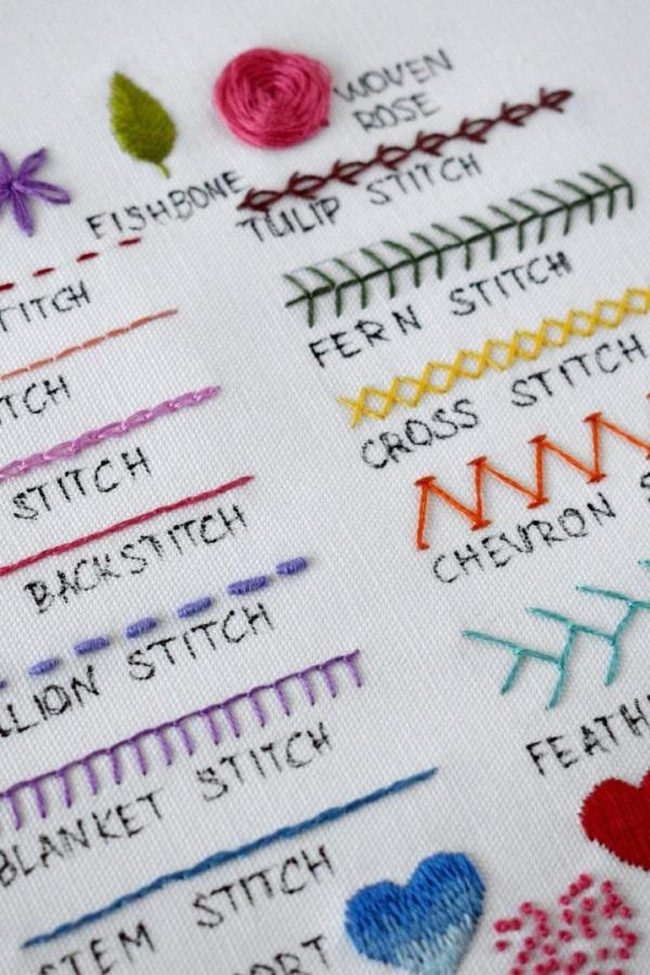
Stitch samplers mass across fabric in bold rainbow bands of thread, running stitches, backstitches, French knots, and chain stitches arranged in rows that look like someone went wild with a highlighter, and that's exactly what they're meant to do.
You will find these practice pieces serve dual purposes: they tevery you fundamental embroidery techniques while doubling as reference guides you can return to later.
Some lines come out crooked and others sit perfectly straight, but neither outcome matters because the goal here is building muscle memory and consistency through repetition, not perfection.
If you're just starting out with embroidery, making mistakes on a sampler feels like progress rather than failure since that's genuinely what it is.
Many samplers include multiple versions of the same motif, fat leaves, skinny leaves, leaves with fancy veins, leaves with no restraint, and you can approach every one as an experimental run without worrying whether they match.
Your first sampler doesn't demand rules or precision; it just needs fabric, thread, and your willingness to keep working through the learning curve.
With this layout, helps you develop real skill before moving on to more complex projects where consistency actually matters.
Hand-Drawn Thread Art Designs
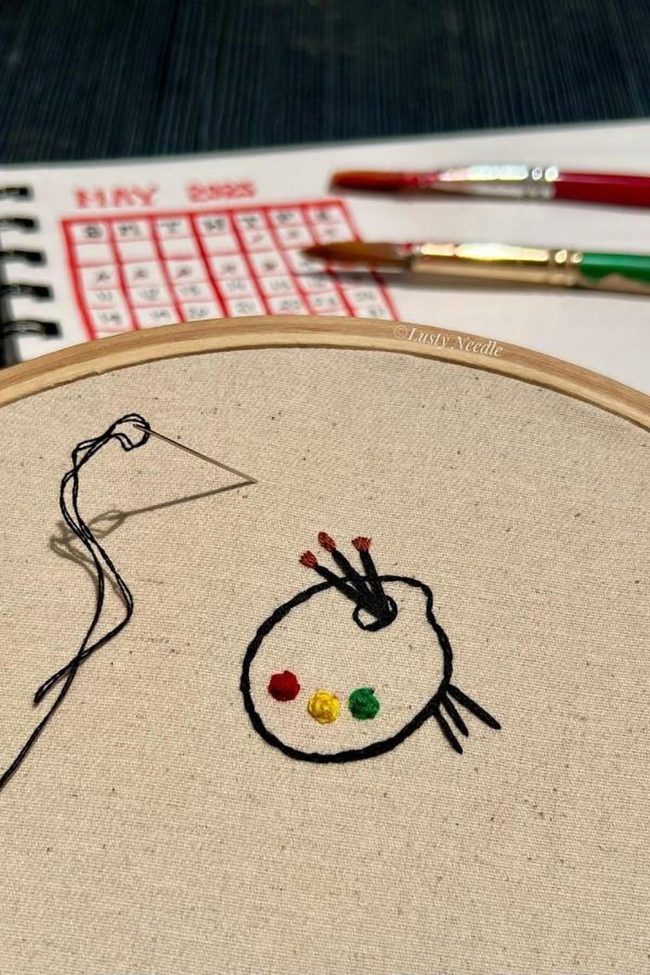
Freestyle embroidery lets you start with your own sketches and doodles, transferring personal artwork onto fabric using carbon paper or fabric markers, and the result often looks like genius, whether it's a paint palette or a collection of weird blobs and cacti that somehow becomes art.
You don't need a plan here, just a needle and the willingness to stitch a vibe without stressing about perfection, and that's exactly what makes it work so well.
Beginners often wait too long for "the right idea," but you can totally just wing it and see what happens when you doodle on fabric and start stitching.
The stitches won't all be neat and the shapes might not make sense, yet everything still comes together in a way that feels like a freestyle poem made of thread.
One person said "I like cactuses and weird blobs" and turned it into something genuinely cool, while another traced a tree and decided it was good enough for a napkin.
No kit, no instructions, and no pressure to draw perfectly, just you trying something and hoping it works out.
Even when the stitches are loose and the design feels hand-drawn and casual, there's something about that chill approach that makes people want to try it themselves.
Timber Base Bee Embroidery Kit
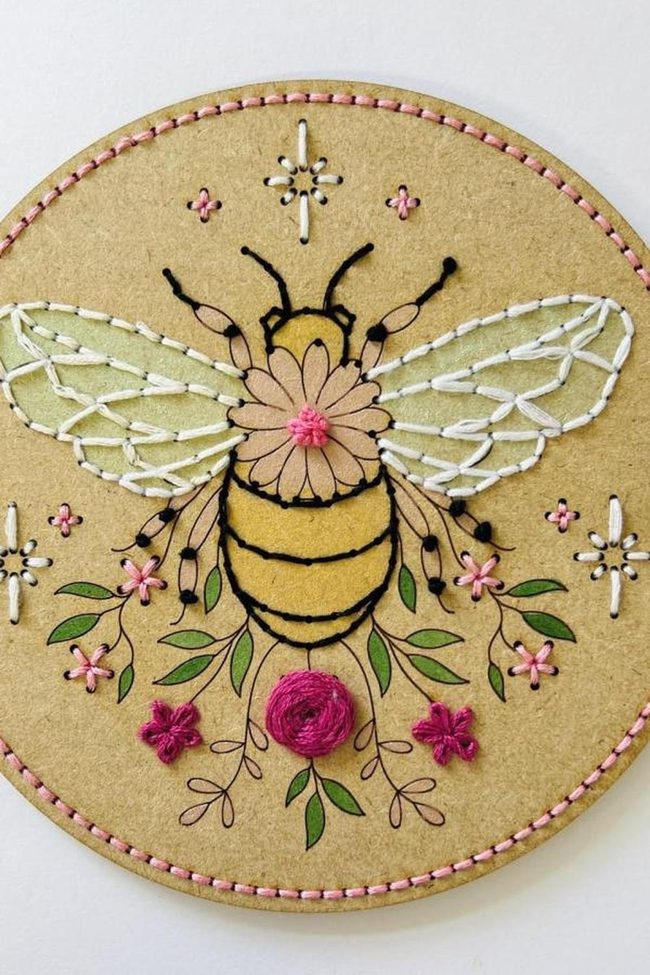
Embroidery kits for beginners come packed with everything you need to jump right in without the stress of shopping for supplies or figuring out where to start.
Wood-based designs are especially cool because they skip the hassle of hoops and loose fabric altogether, with holes already marked like a fancy dot-to-dot game that keeps you on track.
Many kits feature simple, forgiving patterns like flowers and bees that look great even if your stitches aren't perfect, so little mistakes just blend into the overall charm of the piece.
Color palettes with pinks and greens naturally calm your mind as you work, turning across stitch into a simple, soothing rhythm that feels more like therapy than a craft project.
Instructions walk you through across step so your tired brain doesn't have to figure out what comes next, and the whole experience feels manageable rather than overwhelming.
These ready-made kits let you finish something that looks genuinely good without wrestling complicated stitches or complex color changes, just straightforward leaves, gentle petals, and maybe a little bumblebee that steals the show.
You can stitch with confidence knowing the design itself does most of the heavy lifting while you simply enjoy the meditative pace of needle and thread.
Stitched Life Stories In Thread
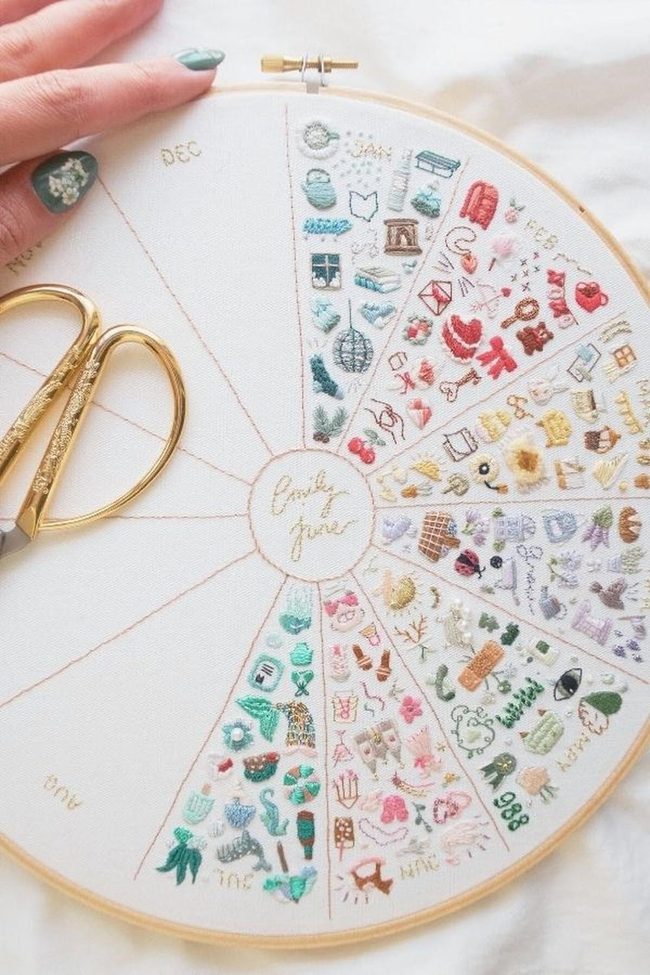
Embroidery journals blend needlework with personal storytelling to establish one-of-a-kind textile art that captures your life in thread and fabric.
You stitch important dates, meaningful quotes, travel memories, and daily observations onto fabric pages, turning what might look like colorful chaos into a real record of your year.
One glance reveals random objects, expressive faces, odd sayings, and stitches that lean at odd angles, and that imperfection is exactly what makes it feel genuine and honest.
Grab your thread and stitch whatever moment stood out that week without worrying about patterns or plans, and watch as your embroidery becomes a form of meditation and self-expression all at once.
Starting out, you might doodle with a pen first before going over with your needle, but honestly, perfection doesn't matter much here since this is journaling with thread, not impressing anyone.
You don't need to know lots of stitches or own dozens of colors to make something that feels real and cool.
Just grab whatever supplies you have, stitch for a while, unpick mistakes, and keep moving forward because the messy, unpredictable quality is what makes these projects work best for beginners.
If your first piece turns out weird or crooked, that just means you're doing it right and creating a treasured keepsake that tells your unique story through fabric and time.
Single Line Floral Pocket Embroidery
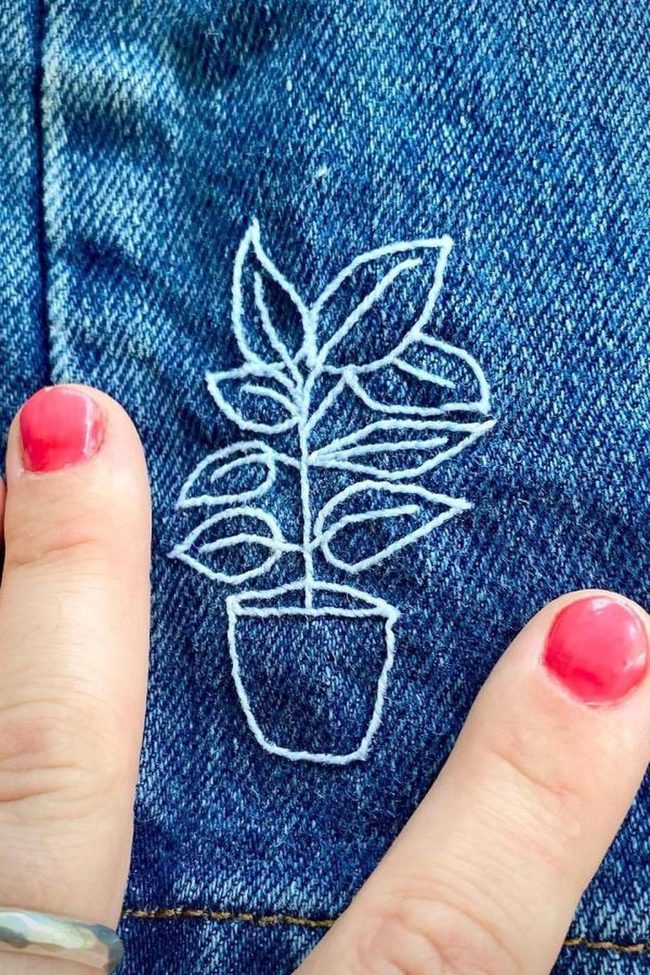
Boldly personalized clothing comes alive when you stitch one continuous line into a plant doodle across a pocket, transforming something mundane like denim into wearable art that radiates character without demanding perfection.
Wildflowers cascading down a skirt seam demonstrate how gutsy stitching directly onto fabric creates impact, and you don't need to draw straight lines or aim for museum-quality results, just strong thread and good vibes.
Simple embroidered additions like monograms on shirt pockets and decorative patches on jeans breathe new life into existing pieces while developing your skills through hands-on practice.
Floral vines traced along jacket lapels show straightforward embroidery projects elevate ordinary garments into fashion statements that feel uniquely yours.
Beginners find success with composition because messy flowers actually work in your favor, adding charm rather than looking unfinished.
Stick and stitch patterns help if you'd rather follow a guide than freestyle, though either method produces results worth wearing.
Every project teaches you something and every mistake disappears once your piece gets worn out into the world.
Sophia Williams
Content Specialist & Design Enthusiast
Expertise
Content Creation for Interior Design, Modern & Contemporary Decor, Sustainable Design Practices, Space Planning, Color Consultation, Home Styling Tips, DIY Home Projects, Trend Analysis, Audience Engagement
Education
Florence Design Academy (Florence, Italy)
KLC School of Design (London, UK)
Sophia Williams, Lead Editor at columbia-artists.com, specializes in making design simple and accessible. She studied at Florence Design Academy and earned a Certificate in Interior Decoration from KLC School of Design in London.
With 5 years of experience, Sophia has worked with design publications and industry experts, helping readers bring their ideas to life. She focuses on practical tips, styling tricks, and DIY projects to make decorating fun for everyone.
In her free time, she enjoys flea markets, upcycling furniture, and exploring sustainable design.