
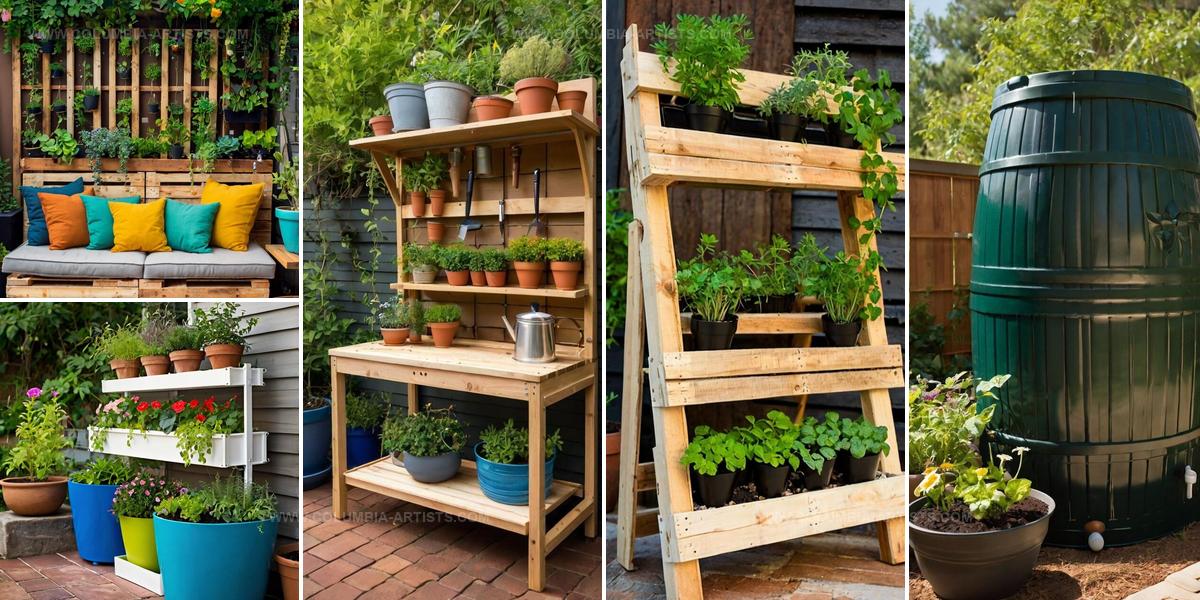
6 Stunning DIY Garden Ideas That Wow Everyone
Jaw-dropping DIY garden ideas can completely change how you experience outdoor spaces without requiring professional help or massive spending.
Simple changes often make the biggest difference when refreshing tired yards and patios.
Whether working with small balconies or expansive backyards, creative solutions exist for every situation and budget level.
Unique projects add personality while solving practical problems like privacy, storage, or entertainment needs.
Many homeable upgrades use recycled materials or inexpensive supplies found at local hardware stores.
The best part about hands-on landscaping is watching your vision come to life through your own efforts.
By the end, you will feel proud showing off a space that reflects personal style and ingenuity.
Slim Rain Barrels Against Walls
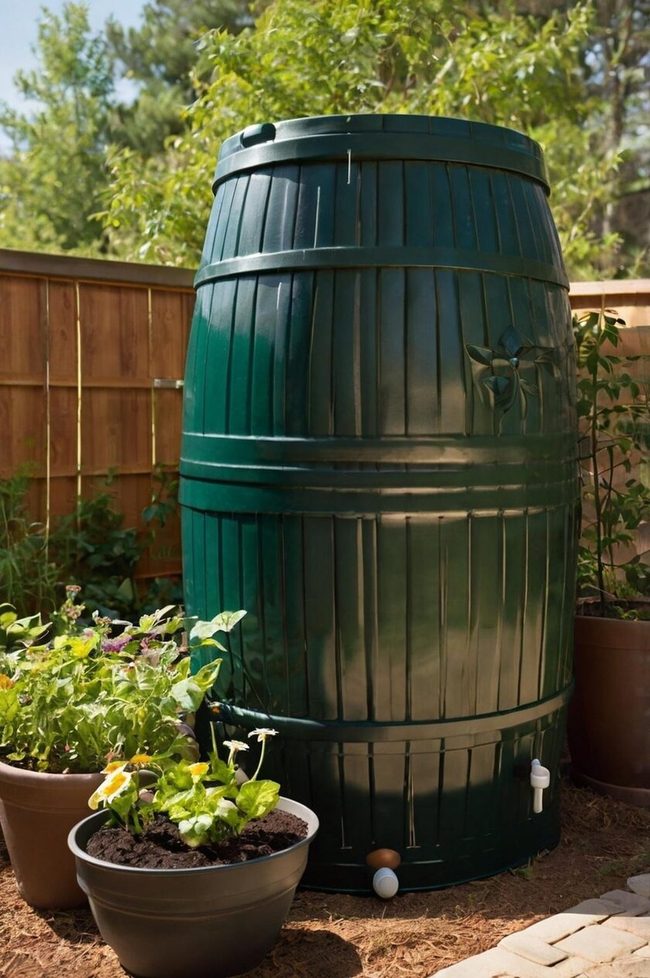
The user's compact rain barrel system is one of the most visually striking additions you can make to a small garden, and slim barrels designed to sit flush against walls or fences won't eat up valuable space.
Positioning your barrel directly under a downspout from your roof or shed captures the most water, and placing it on a solid, level base like concrete blocks or a sturdy stand ensures stability while allowing you to paint it in colors that match your house or garden so it looks balanced rather than utilitarian.
Mounting the barrel higher gives you better water pressure when you're ready to use it, and installing a spigot near the bottom provides convenient access to your collected water.
An overflow hose directs excess water away from your home's foundation, protecting it from potential damage.
If you want to collect more water without taking up extra ground space, you can connect multiple slim barrels in series to expand your system.
During dry spells, this rainwater supply becomes invaluable for watering potted plants, which often need more frequent watering than in-ground plants and actually thrive better on unchlorinated rainwater than tap water.
A 50-gallon barrel fills up surprisingly fast during just one good rainstorm, making it worth the setup effort.
Wooden Pallet Herb Wall Yard
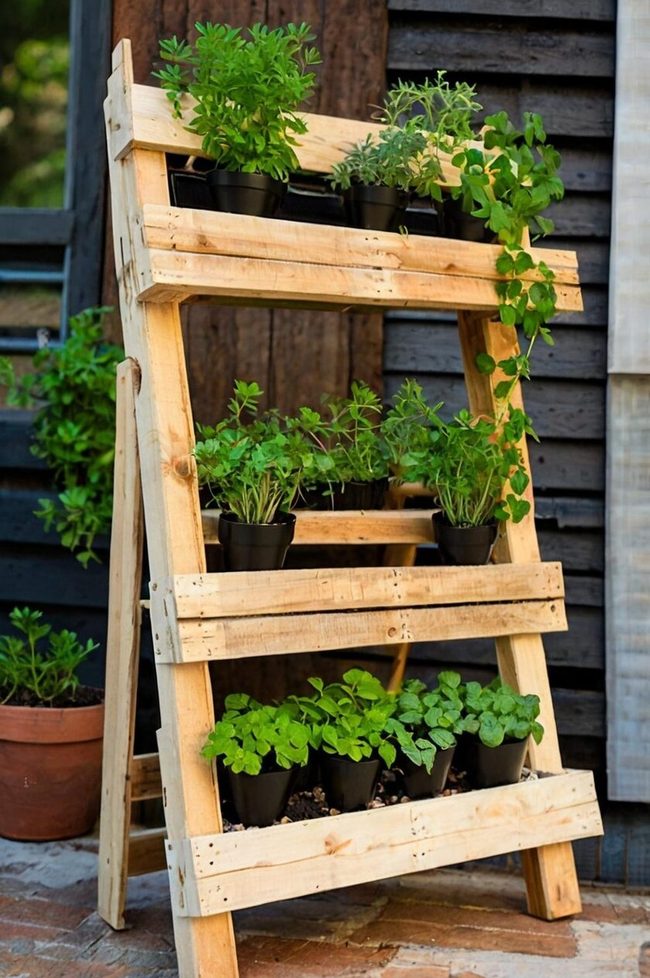
Hanging a wooden pallet on your wall refreshes it into a living garden that doubles as natural wall art, bringing greenery and color to plain surfaces while you grow fresh herbs within arm's reach for cooking.
Finding a free or cheap pallet is easy since many stores hand them out if you ask, and sanding the rough edges keeps you safe from splinters when harvesting.
Line the back and sides with landscape fabric and staple it down so soil stays put once you hang the pallet upright.
Fill the wooden slats with quality potting soil mixed with compost, then plant herbs like basil, mint, rosemary, and thyme in different sections, grouping plants that need similar watering schedules together.
Position your pallet where it gets at least six hours of sunlight daily and water it deliberately while the plants get established and strong.
Beyond herbs, you can experiment with flowers, succulents, or small vegetables in the same setup.
Vertical gardening solves the problem of limited ground space and lets you skip the bending and stretching that comes with traditional garden beds, making herb care simpler and more comfortable.
Wooden Lattice Corner Vegetable Trellis
Corner spaces in small gardens often go unused, but they're actually ideal for growing food vertically and maximizing your available space.
Build a simple corner trellis using wooden lattice panels cut to fit your corner and secured to your fence, wall, or posts, then plant climbing vegetables like cucumbers, beans, or peas at the base and gently tie young stems to the lattice with garden twine until they grab on and climb upward on their own.
Your corner trellis offers wind protection for delicate plants and makes spotting pests and diseases much easier since everything grows upward where you can see it.
One cucumber plant alone can produce dozens of vegetables while taking up almost no ground space, and harvesting regularly keeps production going strong throughout the season.
In fall, you can plant cool-season climbers like sweet peas for extended garden interest and continued harvests.
Even during winter months, the trellis structure itself adds visual interest to your garden landscape.
This straightforward DIY project alters that forgotten corner into one of your most productive garden spots and creates a lush green backdrop that enhances the entire space.
Vertical Container Terrace Levels
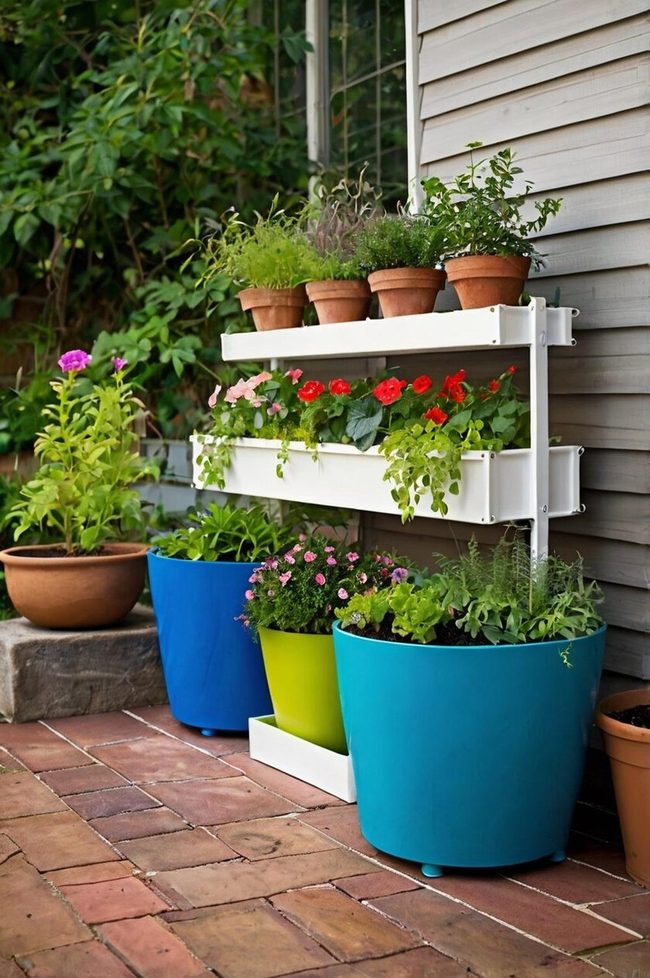
When ground space is limited, you can grow upward with a multi-level container garden that stacks plants vertically to set up layers of lush greenery cascading down from top to bottom.
Trailing plants hanging from upper levels form a waterfall effect of foliage, and mixing different textures, heights, and colors across the shelves keeps things visually interesting without needing much floor room.
Start by finding or building a sturdy shelving unit designed for open-air use, metal plant stands work well, or you can stack cinder blocks with wood planks on top.
Position your shelving where it gets the right sunlight for your plants, then fill containers of varying sizes across the shelves while making sure they have drainage holes to prevent root rot.
Place larger plants on lower shelves and smaller ones higher up for better visibility, keeping in mind that some plants grow much bigger over time.
Line the bottom of deep containers with rocks or broken pottery before adding soil to improve drainage and reduce weight.
Group plants with similar water and light needs together so maintenance becomes simple, and if your structure set ups shade on the highest shelf, that's a perfect spot for plants that prefer less sun.
Water the top level first and let excess drip down to lower plants, which can actually reduce how often you need to water overall.
The layout works great against walls or tucked into corners where you can make the most of vertical space and turn even tiny yards into green-filled zones.
Wall-Mounted Natural Timber Potting Bench
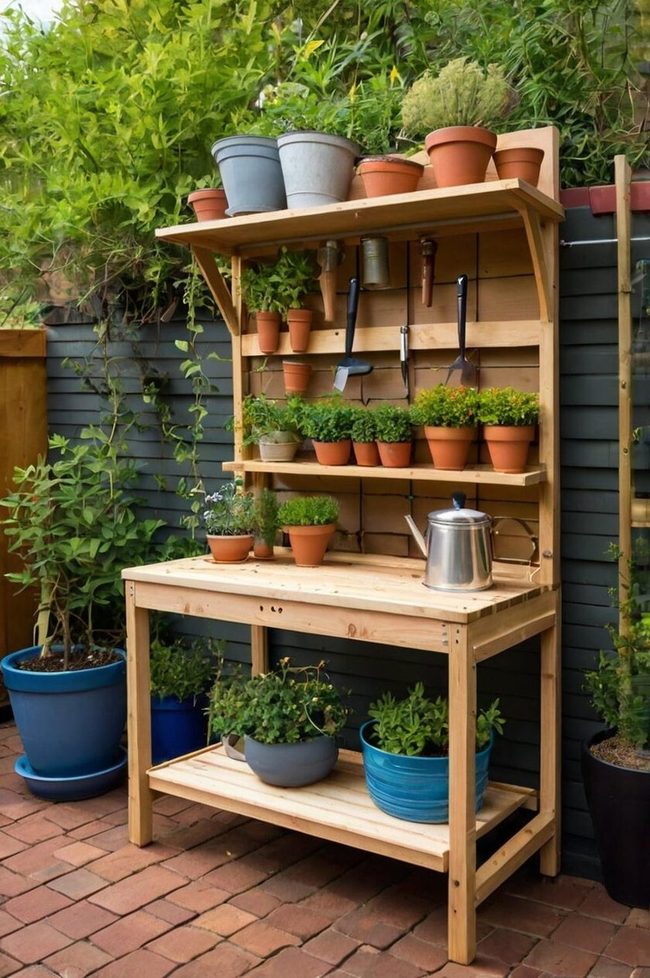
The fold-down potting bench mounted on your wall or fence solves the space problem that traditional benches build in small gardens, and you get a dedicated work surface that disappears when you need the room back.
Start by selecting weather-resistant wood measuring about three feet wide and two feet deep, then attach sturdy hinges to one side so the whole piece swings up flat against the wall or fence.
Install brackets underneath that swing outward to support the bench when it's lowered, and add chains on eachside to prevent it from dropping too far and causing damage.
Paint or stain the wood to protect it from the elements and coordinate with your garden's overall look.
Hooks along the back edge hold your gardening tools while the bench is folded up, and a small shelf positioned above gives you space to store seed packets and pots where you can see them easily.
You might add a thin lip around the edges to keep soil from spilling onto the ground, and small containers attached to the inside of the bench keep plant markers, twine, and other supplies organized and within reach.
When winter arrives, your fold-down bench doubles as storage space while taking up almost no room in your garden.
This project becomes one of those solutions that makes you wonder how gardening ever worked without it, since it offers a user-friendly work area and reclaims valuable space in one simple design.
Pallet Sofa With Living Planters
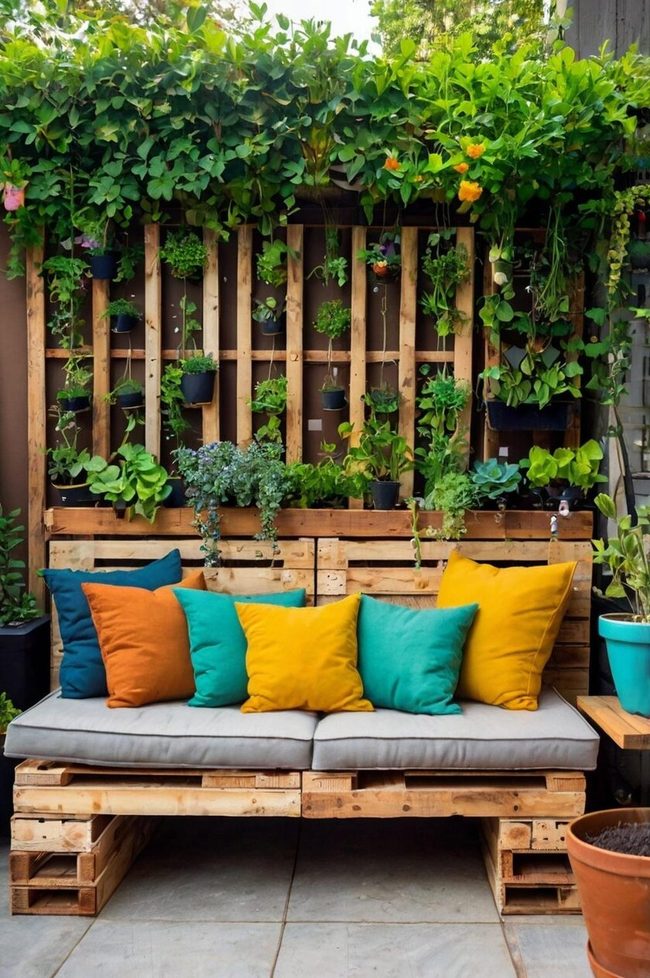
Building a DIY pallet sofa with built-in planters means you get comfortable seating and a living garden feature rolled into one stylish piece.
Trailing plants like ivy, petunias, or strawberries cascade down the armrests and back, creating layers of green that draw the eye and soften the structure with natural color.
Starting with three or four pallets gives you a sturdy base that costs little to nothing, since pallets are often free and already designed for stacking and building.
Sand everything smooth to protect your skin from splinters, then stack two pallets for the seat height and secure a third as the backrest using screws or brackets.
Line the natural spaces in the pallet gaps with landscape fabric and fill them with soil to hold your plants, turning dead space into living decoration.
Add caster wheels underneath if you want mobility around your outside area, and top the seating with cushions made from outside fabric and foam.
Seal all the wood with outside wood sealer so rain and weather don't break down your project over time.
Spatial idea works especially well for small gardens because you get dual function from a single piece and the greenery helps the furniture blend naturally into your landscape.
Juan Martínez
Founder & Lead Designer
Expertise
Modern & Contemporary Decor, Gothic & Dark Aesthetic, Coastal & Beach Style, Farmhouse & Rustic Decor, Outdoor & Garden Design, Nursery & Kids’ Room Design, Kitchen and Bathroom Remodeling, Unique & Specialty Spaces, Living Room and Bedroom Styling
Education
Universidad de los Andes (Bogotá, Colombia)
Pontificia Universidad Javeriana (Bogotá, Colombia)
Juan Martínez, Founder & Lead Designer of columbia-artists.com, grew up in Bogotá, inspired by the city’s mix of old and new architecture. He studied Interior Design at Universidad de los Andes and earned an Advanced Interior Architecture Certification from Pontificia Universidad Javeriana.
With 10 years of experience, Juan has transformed homes across Colombia and beyond, blending modern design with cultural craftsmanship. Through columbia-artists.com, he shares expert tips and inspiration to help homeowners create spaces they love.
Outside of design, Juan enjoys exploring markets, mentoring designers, and celebrating Colombian artistry.