
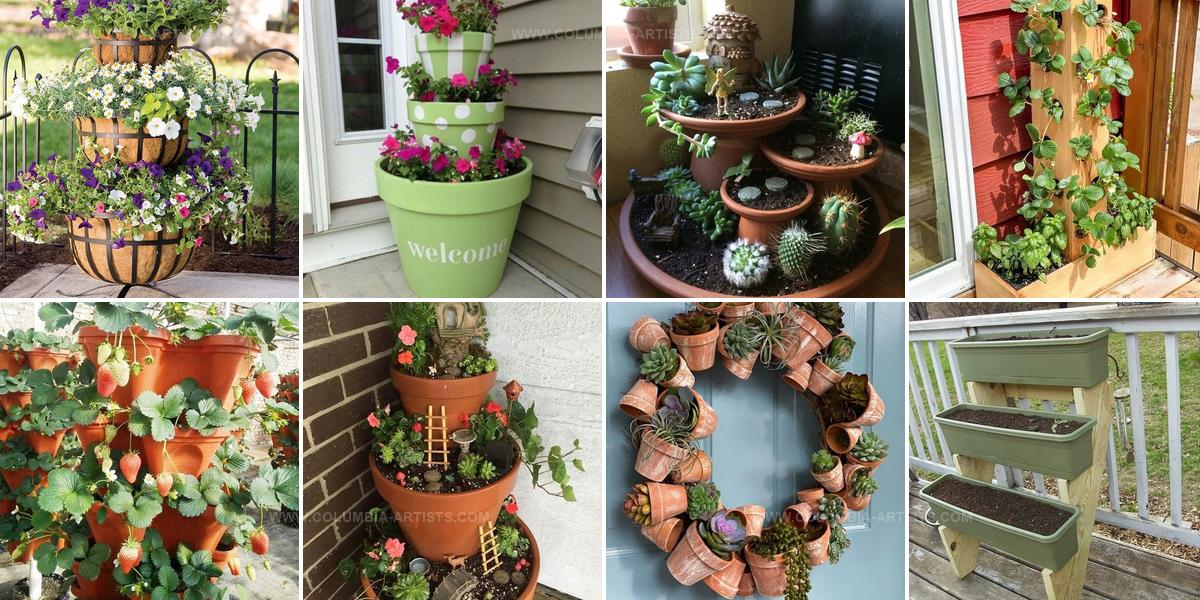
19 Tiered Garden Planter Ideas That Layer Greenery
A tiered garden planter brings vertical growing space and architectural interest to any outdoor area, whether you have a sprawling backyard or just a small balcony.
Plants cascade down multiple levels, creating depth while maximizing limited square footage for herbs, flowers, or vegetables.
The stacked arrangement makes tending to greenery easier on the back since everything stays within comfortable reach.
Different materials ranging from wood to metal to recycled items can match whatever aesthetic appeals to you most.
Budget-friendly options exist alongside more elaborate designs, so cost doesn't have to hold anyone back from building upward instead of outward.
Maintenance becomes simpler when drainage flows naturally from one tier down to the next, keeping roots healthy without constant monitoring.
Colorful Dots Garden Tower
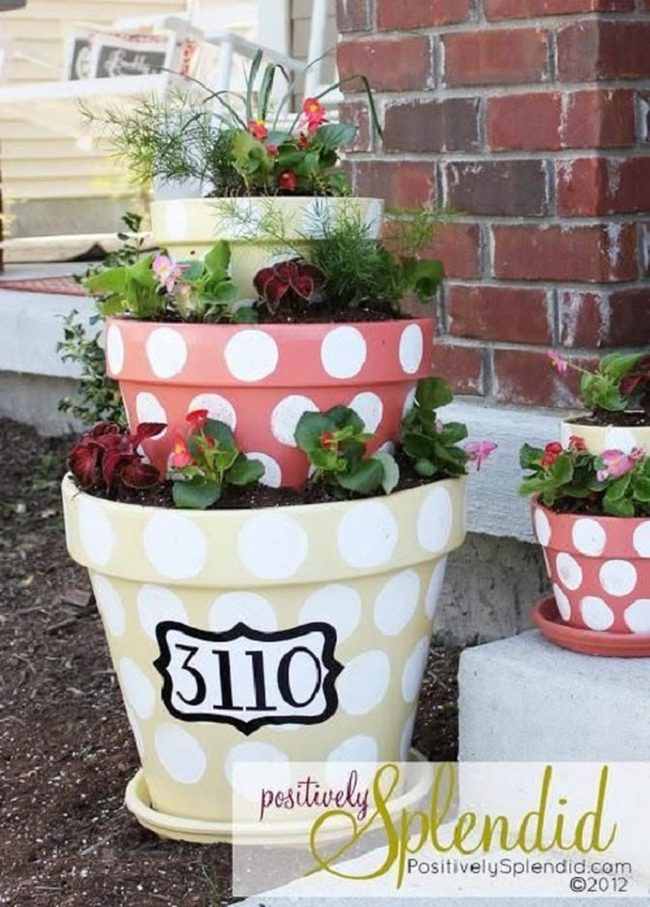
Polka dotted tiered planters with their colorful, compact design spark whimsical charm in any garden setting.
Small outdoor spaces transform into delightful displays when you use these multi-level containers to organize your plants.
Each tier becomes its own mini landscape where you can grow herbs, succulents, and small flowering plants together in unique combinations.
A nice touch is how the different sections let each plant show off its own texture and green personality.
You can position these planters near your patio or kitchen window to add cheerful character right where you spend time outdoors.
Beyond their good looks, they solve real space challenges and help you inject personality into every corner of your garden without needing a lot of room.
Copper Concrete Ascending Gardens
Tiered planters with their dramatic multi-level designs shoot upward and demand attention the moment you enter a garden space, and they solve the puzzle of growing more plants in tight areas while adding real architectural character to patios and decks.
Copper and concrete materials blend together beautifully, offering both modern style and the toughness you need for outdoor conditions.
Succulents and other plants spread across the different height platforms and show off varied textures, colors, and types all in one container.
Each section gets the right amount of sunlight and drainage, which means your plants stay healthier and happier than they would in a flat garden bed.
Layering plants strategically lets you group them for both looks and function, and visitors naturally notice the variety when they walk by.
You can mix tall specimens with trailing varieties and dense ground covers, building interest without needing much ground space at all.
Stacked Glass Planters Vertical
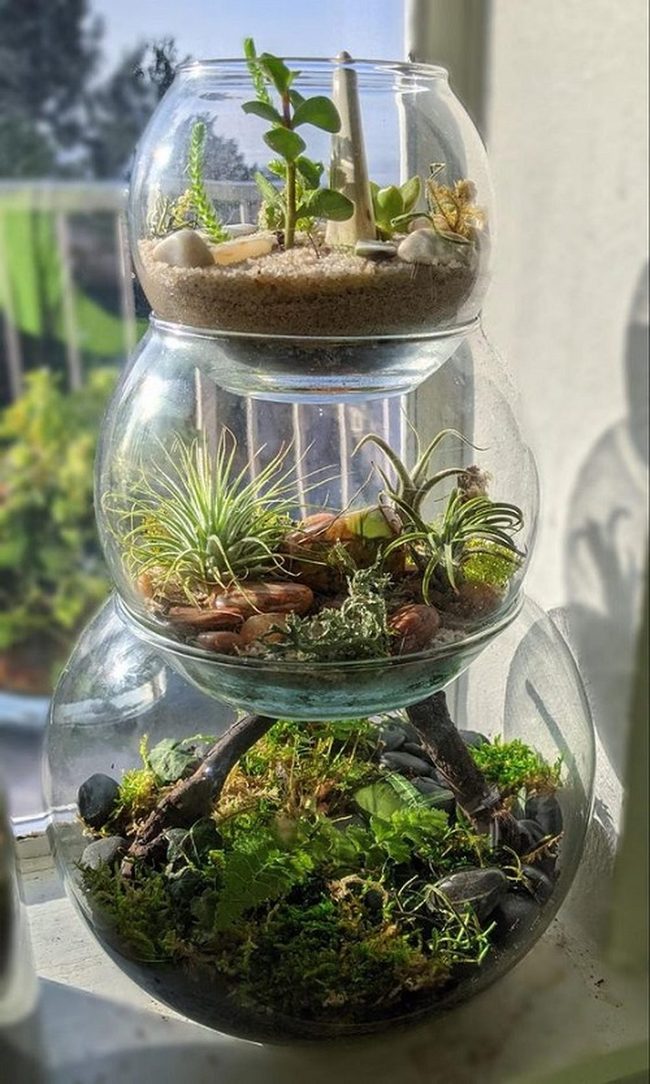
Stacked terrazzo planters bring your botanical collection to life by letting you grow plants upward instead of outward, and this vertical approach delivers real drama to any room or patio.
Glass containers let you admire delicate succulents and air plants from all angles while keeping them safe from damage, and the transparent sides add another layer of visual interest to your display.
When you arrange plants at different heights, mixing various textures and colors becomes simple and natural, so a small space can hold way more greenery than you'd expect.
Layered levels give you flexibility in how you organize your collection, and you can adjust things whenever you want to refresh the look.
Scattering decorative stones and natural elements around each planter adds personality and makes the whole setup feel more grounded.
Stacked Wood Ceramic Garden Layers
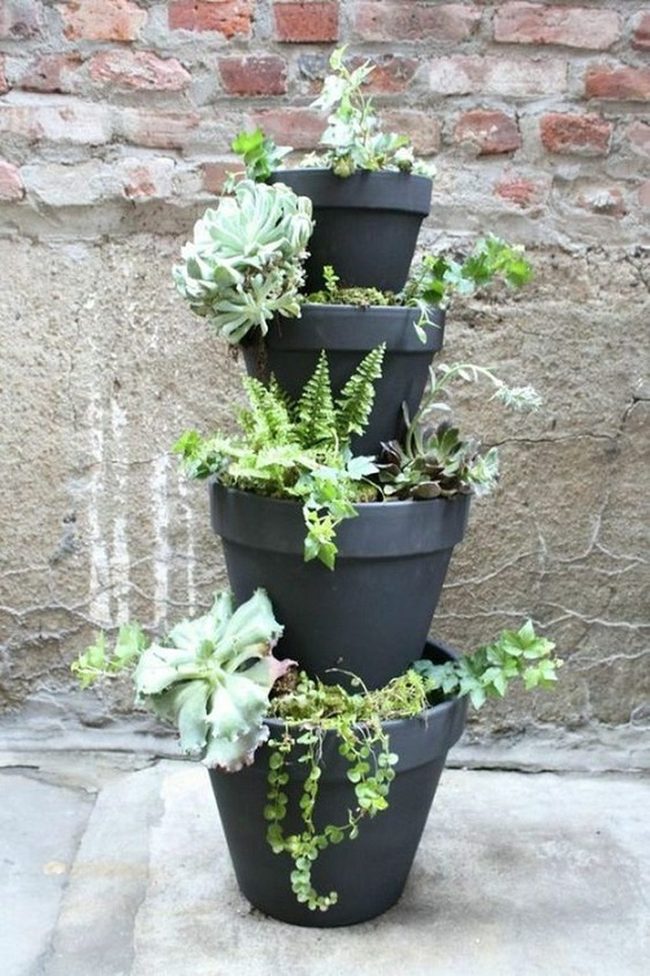
Tiered garden planters stack wood and ceramic containers at multiple heights to create striking visual layers that draw attention and make your outdoor space feel fuller and more interesting.
Matching container colors in your selection gives the whole setup a clean, organized appearance that looks intentional and put-together.
You can grow many different plants in the same footprint by using these vertical levels, so even if your garden space is small, you'll have room for diverse greenery.
Building one yourself is straightforward; you just need basic materials and simple construction methods, so you don't need advanced carpentry skills to get started.
Urban gardeners and anyone working with limited ground space find these planters especially useful for expanding their growing area without taking up precious room.
Placing these tiered containers around your yard turns ordinary outdoor corners into lush, green environments that feel productive and full of life.
Stacked Terracotta Garden Vertical
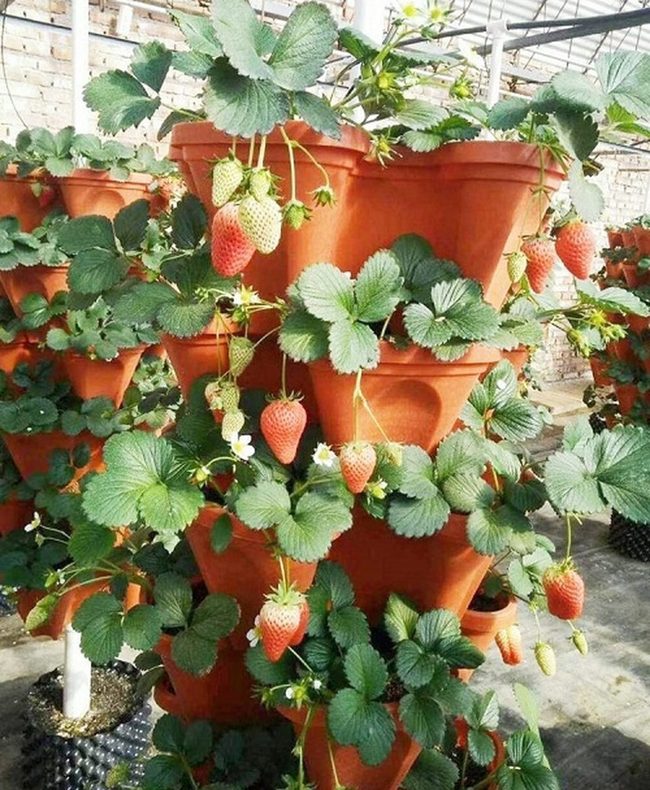
Stacked terracotta planters catch the eye with their warm reddish-brown tones that brighten any outdoor space, and this tiered design works especially well when you want to grow more plants without taking up much ground room.
Multiple levels let you plant herbs, flowers, or vegetables in layers, and the natural earthen color adds genuine warmth to patios, balconies, or small garden corners.
Because terracotta is lightweight, you can easily move these planters around whenever you want to change your layout or rearrange your space.
Urban gardeners love this solution since vertical stacking means more greenery in tight areas, and it's perfect for growing kitchen herbs right where you need them.
Both new gardeners and seasoned plant lovers can set up these planters without any hassle since the construction stays straightforward and simple.
Stacked Terracotta Flower Tower
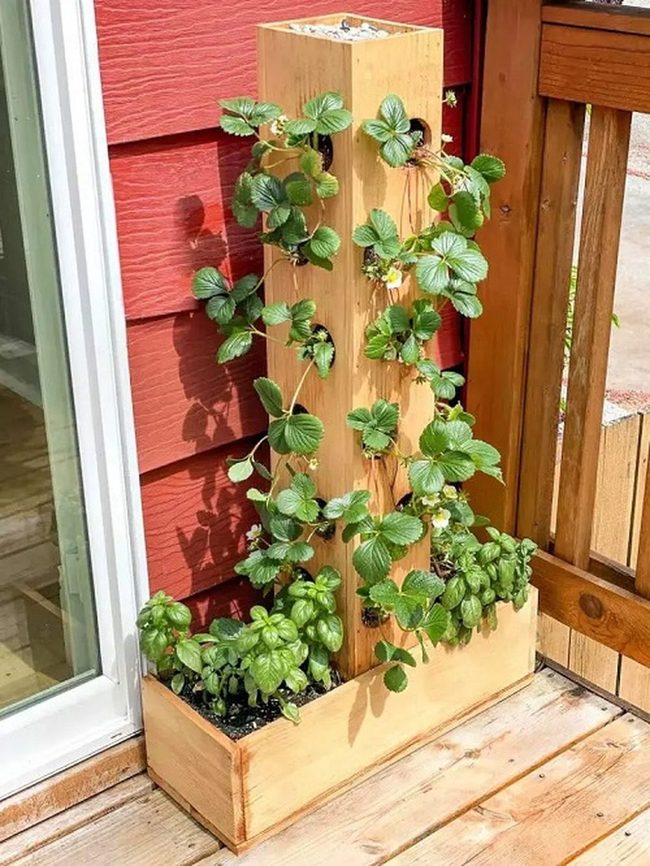
Flower displays in tiered planters stand out as a striking way to grow multiple plants upward rather than outward, and stacked terracotta pots give you a garden solution that works in tight spaces while looking beautiful.
You can arrange smaller flowers on the upper levels and let larger plants settle comfortably at the base, creating layers of greenery that draw the eye from bottom to top.
Terracotta brings that warm, earthy feeling to your outdoor area with its natural texture and timeless appeal.
Building one of these setups is straightforward enough that anyone can do it, whether you're just starting your plant journey or you've been gardening for years.
When you pick your pots and position your plants with a bit of thought, the result becomes a garden that feels full and interesting from every angle.
The best part is how practical this approach is; you get more plants in less space and a display that actually looks like you planned it.
Tiered Ceramic Succulent Display
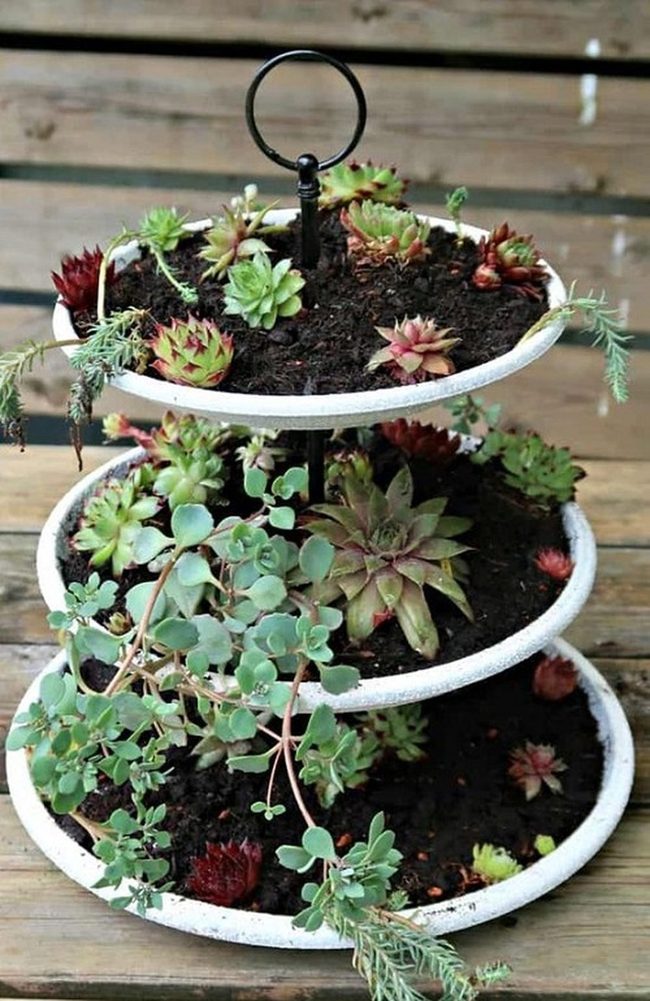
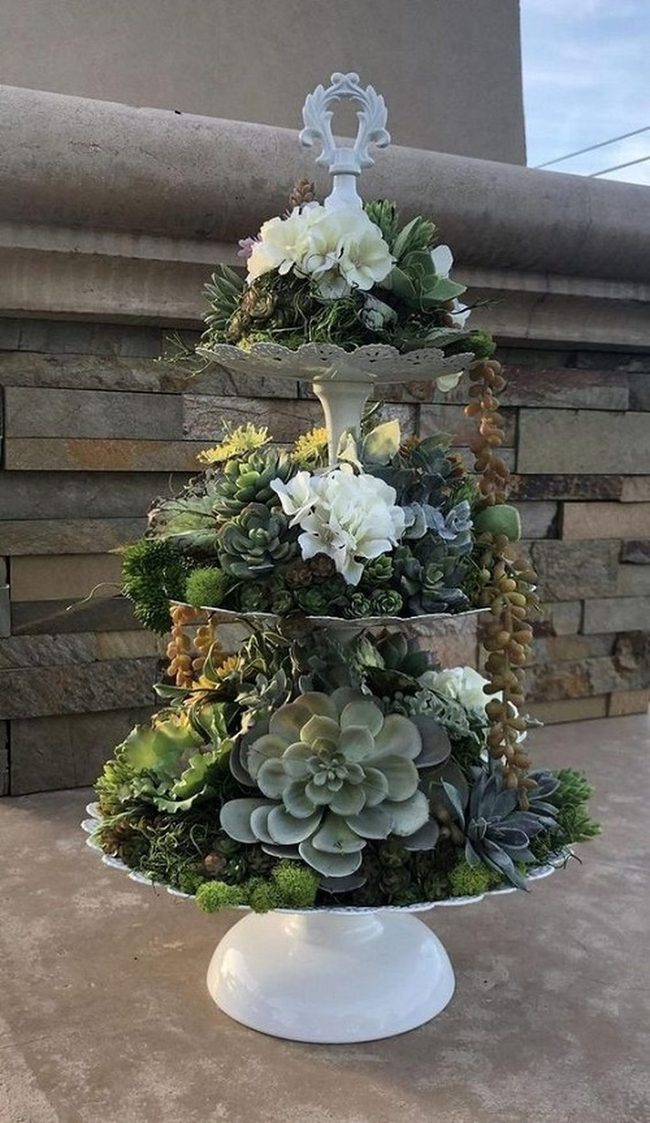
Succulent cake stand planters stack greenery in multiple tiers and bring real botanical beauty to tiny spaces, whether you're decorating an apartment balcony or a kitchen counter.
Delicate succulents fit snugly into ceramic or metal tiers, and this arrangement lets you grow more plants in areas where floor space is tight.
Kitchen counters and patio tables turn into instant garden displays when you add one of these pieces, and you'll be amazed at how much personality they bring to smaller homes.
Cake stands work as simple platforms for your tiny plants, and the multi-level design means your succulents have room to spread while looking like living art.
Compact and easy to set up, these planters are perfect for windowsills and small gardens where you want greenery without taking up much room.
You can move them around whenever you want, and switching out different succulents keeps your space fresh throughout the seasons.
Stacked Metal Garden Tiers
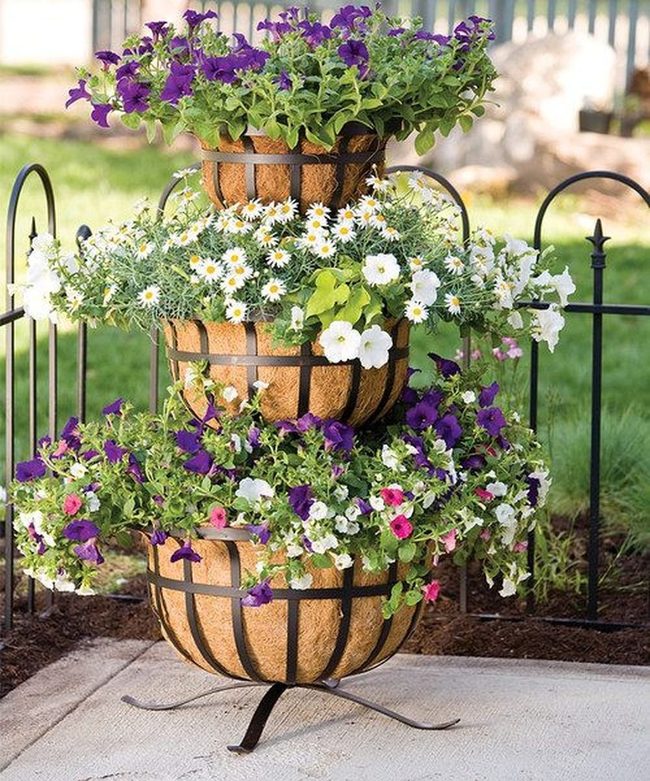
Metal tiered planters bring immediate visual drama to any garden by stacking multiple pots across different heights, and sturdy metal pipes connect these containers together in striking geometric patterns that demand attention.
Strong metallic frameworks hold your plants securely while the layered arrangement lets you grow a diverse collection in surprisingly little space, which works especially well if you have a balcony, patio, or small outdoor area to work with.
Lightweight construction means you can shift things around whenever you want, moving containers to catch better sunlight or adjust how the whole setup looks.
Since these systems come in many styles; from industrial metal designs to more decorative frameworks; you can find an option that fits whatever landscape style you prefer.
Organized vertical spacing lets you pack in numerous plants without sprawling across your ground, and the different levels create natural visual separation that makes each pot feel intentional.
Growing multiple plant varieties at once becomes much easier because you're not fighting for floor space.
Stacked Cedar Herb Tower
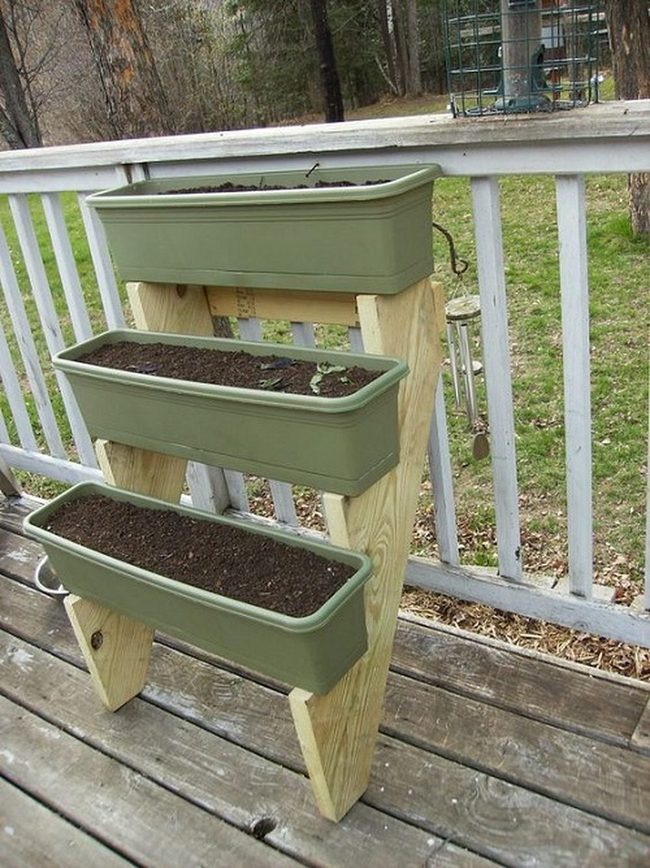
Stair-step tiered planters with their dramatic stacked design bring immediate visual interest to any compact garden space, and wooden structures built at gentle slopes let you organize multiple plant types in one neat system.
Natural materials like reclaimed cedar add rustic charm to your outdoor area while wooden planks set at strategic angles create sturdy support for herbs, succulents, and colorful flowers.
Layering plants vertically means sunlight reaches every single plant perfectly, which helps everything grow strong and healthy.
Small gardens transform into lush green displays when you use this intelligent arrangement approach.
You solve space challenges while boosting your green living environment at the same time.
These compact planter systems work well because they maximize what little room you have available.
A nice touch is how practical and beautiful this solution turns out to be for anyone wanting more plants without needing a large yard.
Stacked Succulents Green Sculpture
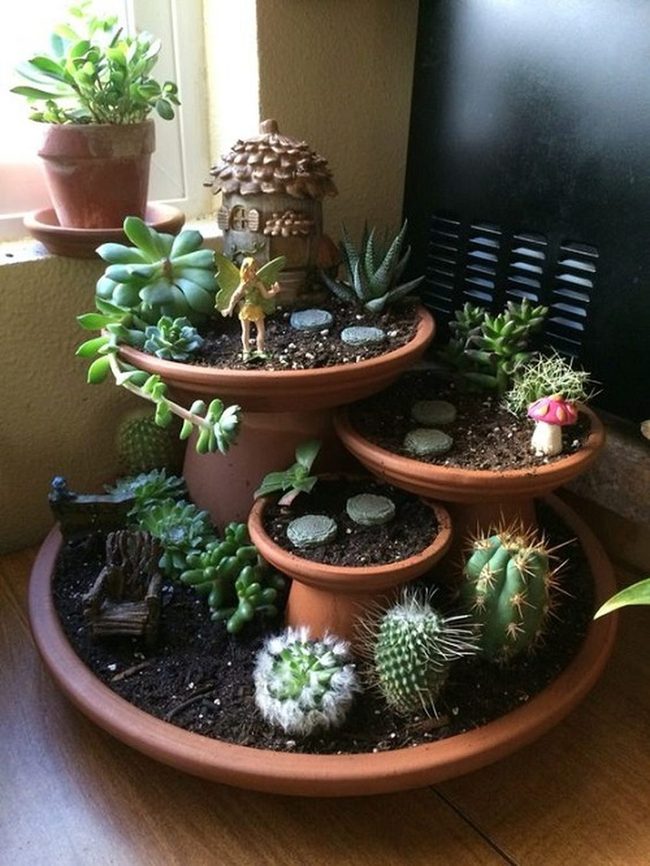
Tiered cacti and succulent planters create dramatic desert landscapes with their striking sculptural shapes stacked across multiple levels, and sunlight hits each green form to reveal intricate textures and rich color variations that draw attention immediately.
You can arrange different succulent species together for a harmonious blend that looks like a desert scene brought indoors, and the compact design means you won't spend hours on upkeep while still enjoying plenty of visual interest.
Ceramic or terracotta containers work beautifully with these plants and enhance the natural earth tones that tie in with your overall space.
Positioning your plants strategically ensures they get the light and air circulation they need to thrive, which also means they'll look their best as a display.
A nice touch is how these tiered arrangements let you layer various textures and heights without taking up much floor space, making them perfect for shelves, windowsills, or corner spots that need some life.
Stacked Succulents Purple And Silver
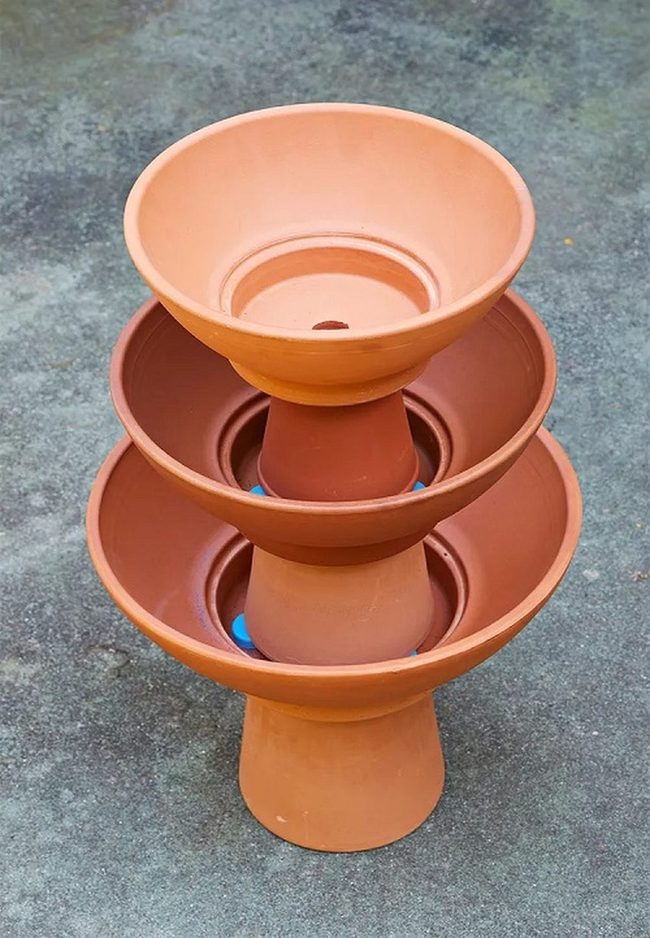
Succulent tower planters stack multiple layers of drought-resistant plants into one compact vertical garden that catches attention with its layered arrangement of pale green, deep purple, and silvery blue varieties mixed together to build real visual depth.
Small ceramic or wooden containers create cascading levels that work beautifully with echeveria, sedum, and other succulents of different textures and colors.
Terracotta, concrete, or weathered wood containers display these low-maintenance plants in ways that feel both natural and stylish.
You may enjoy how these towers need minimal watering, making them perfect if you have a busy schedule or are new to gardening.
Simple assembly means you can build this garden accent with basic DIY skills and affordable materials you probably already have at home.
Lightweight construction lets you move the tower around your outdoor or indoor spaces whenever you want to refresh your layout.
Cascading Green Wall Layers
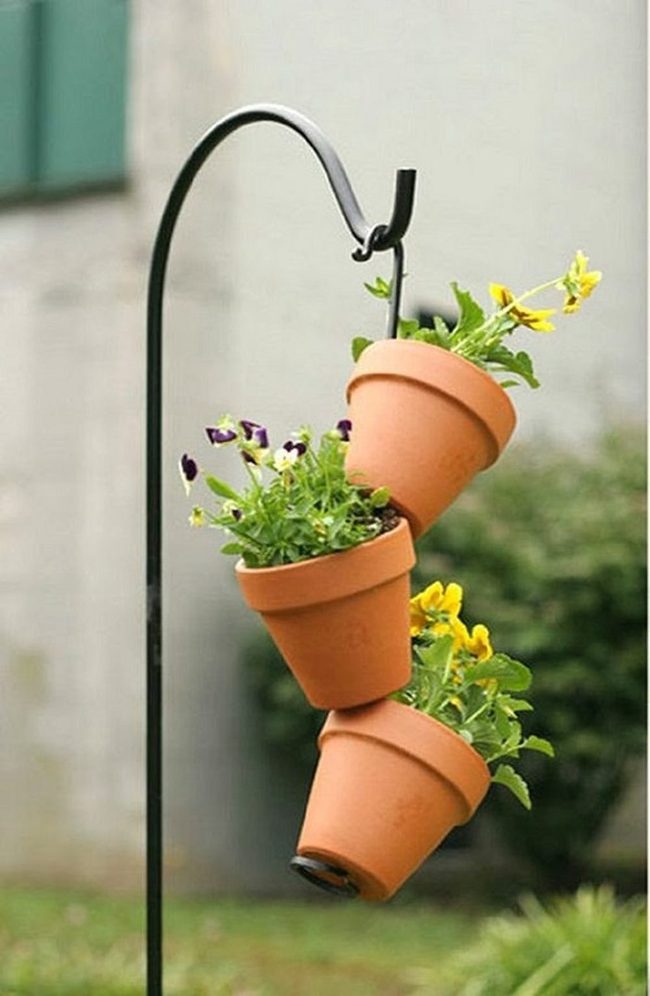
Hanging tiered planters stack multiple pots from sturdy frames, and this design creates a striking display of cascading greenery that transforms small yards or balconies into lush garden spaces.
Plants drape gracefully between the levels, adding life and movement to walls and fences in ways flat gardens simply cannot match.
You can mix herbs, flowers, and trailing plants together for a garden that reflects your own style and preferences.
Setting up these systems involves basic hardware and some thought about weight distribution so everything stays secure.
Lightweight materials like plastic or metal make the hanging process much easier than heavier alternatives.
Each container needs drainage holes to keep your plants healthy and prevent water from sitting at the bottom.
This vertical approach maximizes growing space without taking up much ground area, making it perfect for anyone working with limited room.
Tilted Clay Tower Garden
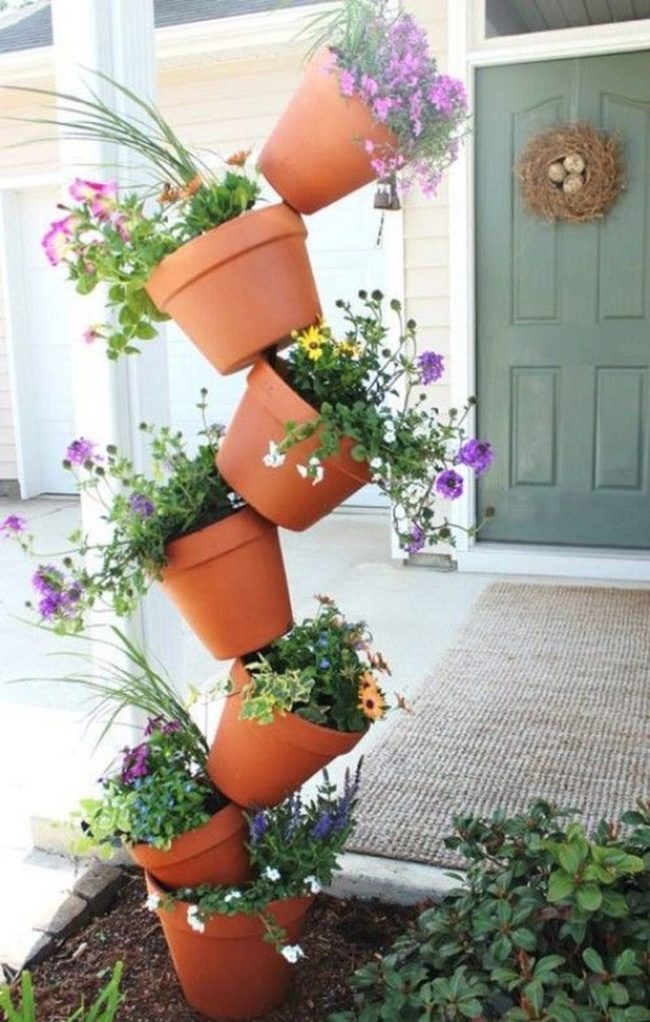
Stacked terra cotta pots arranged in topsy-turvy towers create a striking sculptural display that immediately catches attention in any garden space.
These clay containers balance in unexpected ways and form vertical landscapes that plant enthusiasts absolutely love to show off.
You can fit multiple plants into each tier, and this smart stacking helps you make the most of limited garden areas.
Colorful flowers and cascading herbs thrive in these playful setups, adding dimension and personality to your outdoor space.
If you have a small patio, balcony, or cramped garden corner, this compact design works remarkably well without taking up much room.
Building one of these arrangements requires just simple materials and a little time, yet the results look impressive enough to get your neighbors talking.
Breaking away from traditional gardening rules opens up fun possibilities, and we find that these unconventional towers prove how satisfying it can be to let your imagination run wild with plant placement.
Cascading Wood Planter Tower
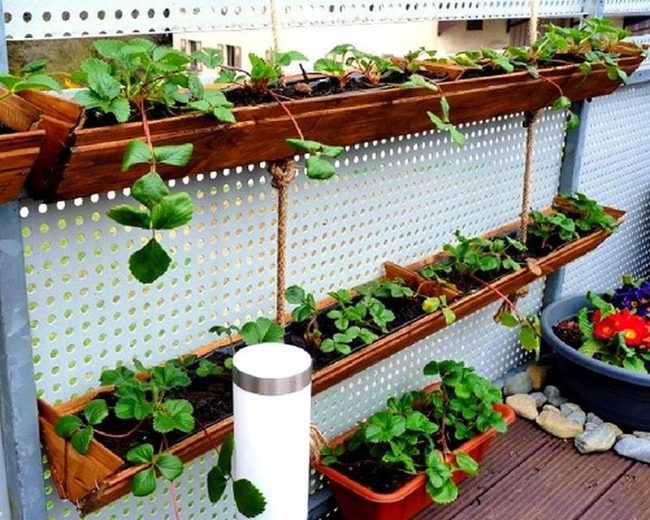
Tiered hanging wooden planters draw immediate attention with their cascading greenery that creates dynamic visual textures across your space, and this vertical arrangement adds genuine architectural interest to patios, balconies, or indoor corners without demanding much room.
Wood craftsmanship delivers sturdy support for multiple plant levels in compact areas, making these designs practical for both small urban spaces and larger landscapes.
Natural wooden construction brings durability and warmth that fits almost any setting, while the hanging design lets you move and rearrange your plant collection whenever you want.
Beyond looks, these planters solve real space challenges by freeing up ground area and letting you grow more plants in tight corners.
The best part is how versatile they are since they adapt to different decorating styles and plant preferences.
You can mix and match various plants at different heights, and the whole setup becomes a living garden that sparks creativity.
Cascading Succulents Green Walls
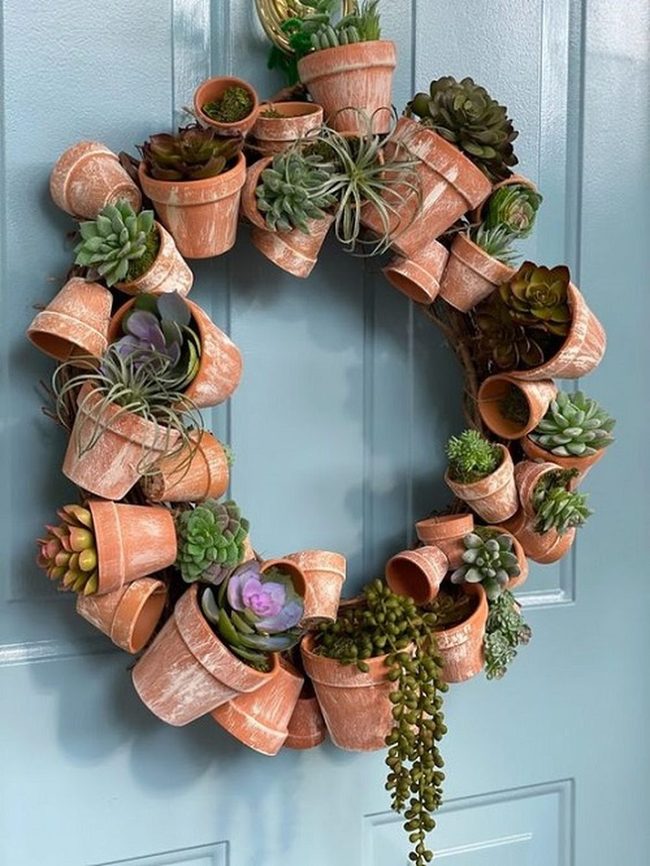
Tiered planters and succulent wreaths turn bare walls into striking green displays that cascade beautifully across your space and transform ordinary surfaces into botanical art.
You can arrange succulents in intricate patterns that look spectacular, and these vertical garden solutions pack lots of greenery into small areas without eating up floor space.
Installation is straightforward since the mounting techniques are simple enough for beginners to handle, and the lightweight materials won't stress your walls during setup.
Once you put them in place near a window or outdoor patio, these living arrangements thrive with perfect light exposure.
One nice thing about succulents is they need very little watering, so maintaining these green compositions takes minimal effort on your part.
A nice touch is how these decorative pieces stay healthy and vibrant with just basic care, giving you beautiful results without constant upkeep.
Placing them strategically around your home brings nature indoors while keeping maintenance low and visual impact high.
Stacked Blooms In Tiered Planter
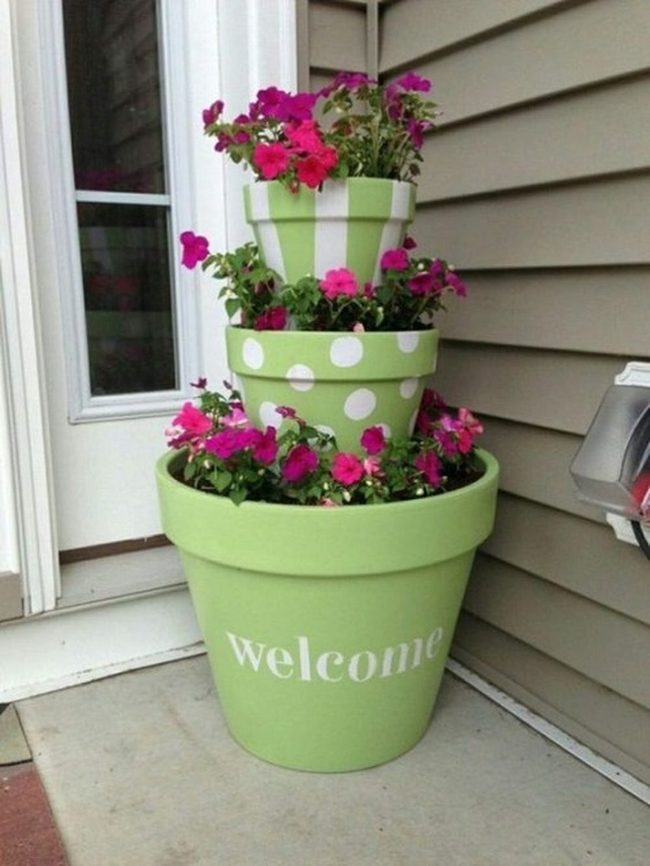
Floral arrangements in tiered planters deliver dramatic garden design by stacking blooms and plants at different heights, and cascading blossoms fill each level with rich color and interesting texture that catches attention from across your yard.
Strategic flower selection helps you maximize small outdoor spaces by mixing perennials with seasonal blooms to create dynamic visual interest as you move up through the planter heights.
Compact layers mean you can pack multiple plant types into one structure without taking up much ground space.
Placing these arrangements near patios or entryways transforms ordinary garden areas into displays that people notice right away.
Colorful combinations of flowers turn a basic garden corner into something special and botanical that feels less bare and more alive.
Concrete Blocks, Stacked Gardens
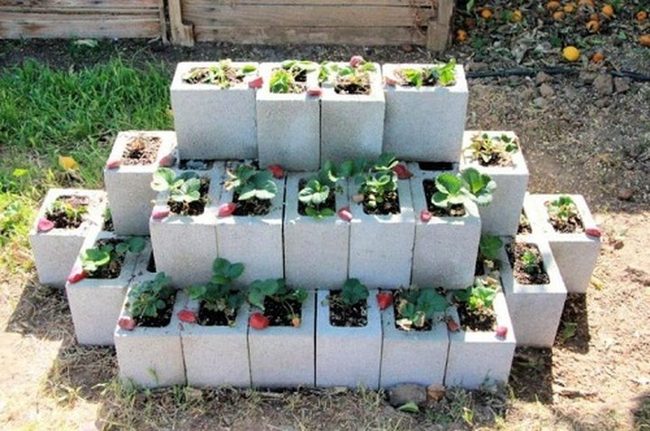
Cinder block planters create stunning vertical garden designs with simple concrete blocks that transform small spaces into lush growing areas, and these sturdy structures offer excellent drainage while providing multiple levels for compact landscapes.
Each block becomes its own mini garden container ready for soil and seeds, so you can arrange them however you like to design a personalized green space that reflects your creativity.
A nice touch is how affordable and adaptable these planting structures are, and they make gardening more accessible and fun for anyone working with limited space.
You can stack and position the blocks to maximize your gardening area without much effort at all.
Building a cinder block garden lets you experiment with different layouts and plant combinations.
Gardening becomes truly rewarding when you have a system that works with your space instead of against it.
These ingenious solutions prove that you don't need fancy equipment or lots of room to grow something beautiful.
Miniature Woodland Multi-Level Planters
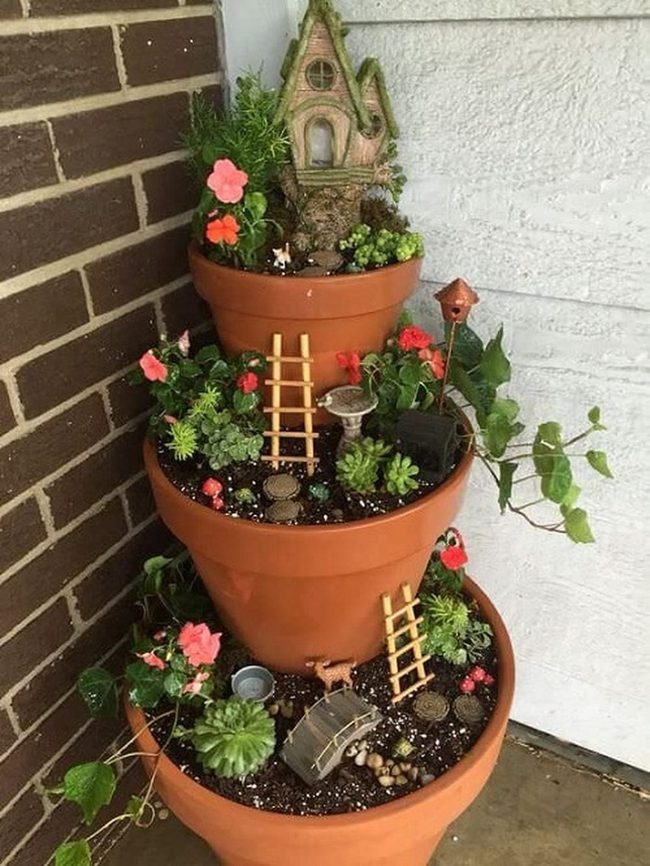
Stacked fairy garden planters with their multi-level designs create charming woodland scenes that immediately grab your attention and spark imagination.
Small ceramic or wooden tiers serve as platforms where you can arrange miniature landscapes complete with tiny houses, delicate bridges, and petite trees nestled among colorful flowering plants.
Moss-covered surfaces and pebbles scattered throughout add depth and realism to the display.
Both children and adults find themselves drawn to these whimsical arrangements because of the intricate details that make each planter stand out as unique.
What I appreciate about this setup is how creative layering transforms even the smallest corner into a miniature world that feels complete and full of character.
You don't need much space to pull off this effect, which makes it perfect for patios, shelves, or windowsills.
The combination of plants, tiny structures, and natural textures work together to hold your interest every time you look at it.
Stacked Barrel Herb Tower
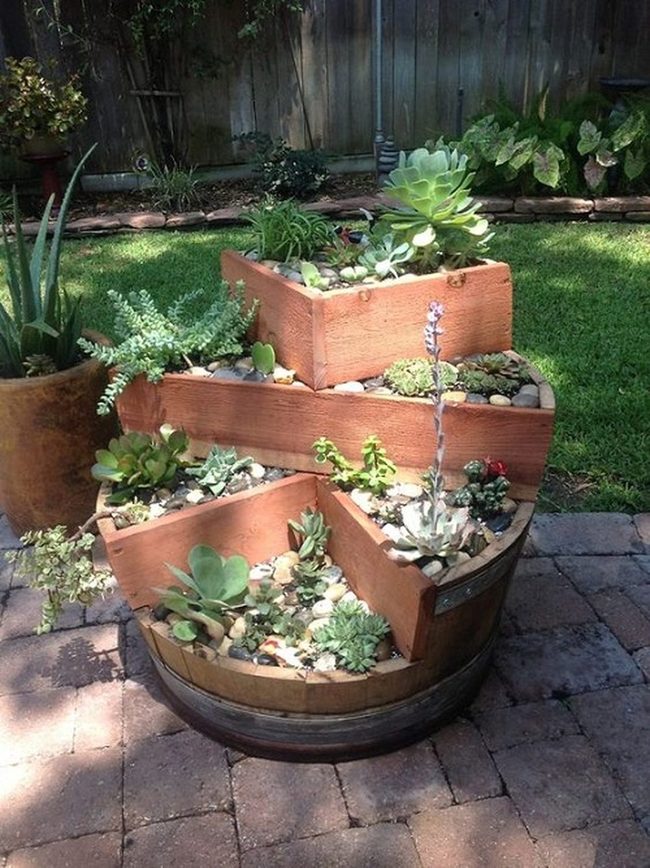
Stacked wine barrel planters give you a dramatic vertical garden that catches the eye with natural wood tones contrasting against lush green plants, and this rustic setup works beautifully for herbs, flowers, and vegetables all in one compact space.
Wooden barrel halves layer on top of each other to build multiple growing levels, which means you can fit more plants into a smaller area while still giving each one room to flourish.
Different plant types thrive in this arrangement because you can adjust soil depths and moisture levels for each tier.
Drainage holes built into every barrel section keep roots healthy and stop water from pooling at the bottom, so your plants stay happy and strong.
Since you're repurposing old barrels instead of buying new containers, this approach brings sustainable creativity to any landscape.
Natural wood ages beautifully over time and pairs well with the greenery above it, turning a functional garden feature into something that looks intentional and polished.
Sophia Williams
Content Specialist & Design Enthusiast
Expertise
Content Creation for Interior Design, Modern & Contemporary Decor, Sustainable Design Practices, Space Planning, Color Consultation, Home Styling Tips, DIY Home Projects, Trend Analysis, Audience Engagement
Education
Florence Design Academy (Florence, Italy)
KLC School of Design (London, UK)
Sophia Williams, Lead Editor at columbia-artists.com, specializes in making design simple and accessible. She studied at Florence Design Academy and earned a Certificate in Interior Decoration from KLC School of Design in London.
With 5 years of experience, Sophia has worked with design publications and industry experts, helping readers bring their ideas to life. She focuses on practical tips, styling tricks, and DIY projects to make decorating fun for everyone.
In her free time, she enjoys flea markets, upcycling furniture, and exploring sustainable design.